Iran Hardliners Seek Nuclear Treaty Exit as Impeachment Push Targets Foreign Minister
The Paydari Front is asking parliament to leave the Non-Proliferation Treaty while a motion to oust Foreign Minister Abbas Araghchi moves through the legislature.
By Mateo Thompson ·
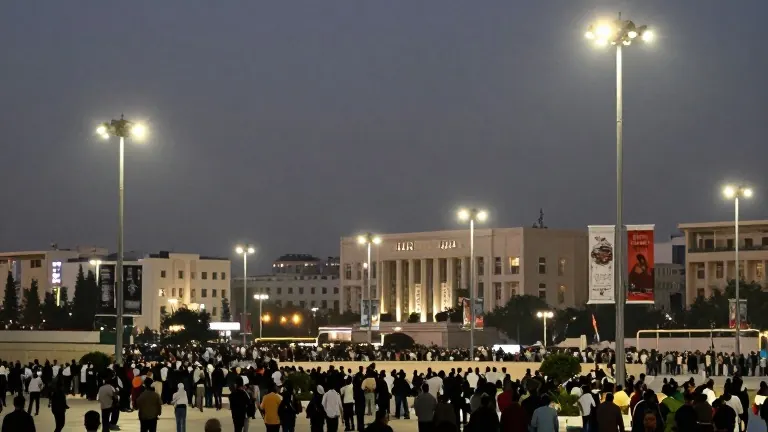
Iran's hardline Paydari Front has asked parliament and the Supreme National Security Council to pull the country out of the Nuclear Non-Proliferation Treaty. The faction says any military work tied to that step should happen "as quickly as possible". The request follows a war launched by the United States and Israel on February 28 over claims that Tehran was building nuclear weapons. The fighting closed much of the Strait of Hormuz to shipping and disrupted global energy supplies.
The conflict has deepened a split inside Iran. President Masoud Pezeshkian and other centrists want talks with Washington to end the fighting and protect an economy they describe as crumbling. The Paydari Front rejects that path and argues the war should run until the United States gives in. For 200 days, supporters of the faction have gathered at night in public squares across major cities. What began as shows of support for the government turned into organized rallies against diplomatic efforts. Their signs read "No compromise, no surrender: the fight against America" and "Negotiating with the enemy is a betrayal of the homeland".
The hardliners hold seats in parliament, Tehran's municipal government, religious pulpits, universities and the media. Amirhossein Sabeti, a member of parliament aligned with the Paydari Front, said negotiations will not start until the siege on Iran's southern ports or the sanctions end. "The enemy's objective of destroying Iran has not changed. It is simply waiting for the right moment to launch another surprise attack," Sabeti said. He added: "The only language the world understands is the language of power." The faction has filed a motion to impeach Foreign Minister Abbas Araghchi after his trip to New York for the UN General Assembly. Parliament is also weighing a bill that would criminalize interviews with foreign media outlets.
Supporters of the government are pushing back. Davood Heshmati, a journalist considered close to Pezeshkian, said the United States appears to have dropped plans to topple the Iranian government for narrower aims, which makes a deal more likely. "To prevent a war, all alternatives to military action must first be tested. Negotiations and a diplomatic agreement are among those alternatives," Heshmati said. He said any settlement must respect Iran's territorial integrity.
Negar Mortazavi, a political analyst, said hardliners can raise the cost of talks but cannot block them. "Their strength lies in their ability to mobilise supporters, shape political discourse, pressure the government, and raise the political cost of diplomacy," she said. She noted that decisions on war and peace sit with Supreme Leader Mujtaba Khamenei and the Supreme National Security Council. "The [hardliners] are powerful enough to complicate diplomacy, but not necessarily powerful enough to stop it," Mortazavi said.
What comes next is set by the calendar in Tehran. The impeachment hearing for Araghchi has not been scheduled. The motion sits with parliament, where it would need a majority to proceed. The Supreme National Security Council has the Paydari Front's request on a treaty withdrawal before it. Street rallies and television programs opposing a settlement to the war are slated to continue.