
Amazon Abandons Virginia Data Center Plans
Following intense local opposition, the tech giant will convert a Loudoun County site into housing and community spaces instead of AI infrastructure.
By Ivan Mori ·
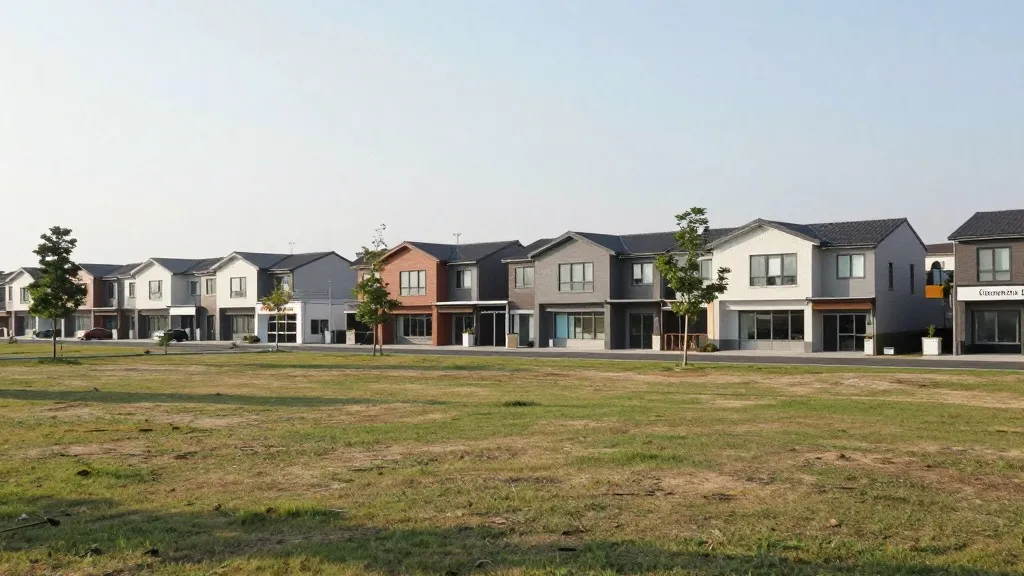
A significant standoff between one of the world's largest technology firms and a suburban community has ended with a complete pivot in land-use strategy. Amazon has formally withdrawn its proposal to construct four new data centers on a 122-acre parcel in Loudoun County, Virginia. The decision marks a notable reversal for the company, which had initially moved to secure the former George Washington University campus site just outside Washington, D.C., in July of this year. Instead of housing massive servers, the majority of the property will now be developed for mixed-use and residential purposes, signaling a shift in how major tech companies approach local infrastructure conflicts.
The primary driver of this change was sustained pressure from local residents who opposed the expansion of data centers in their area. Loudoun County, frequently referred to as "Data Center Alley" due to its dense concentration of facilities, has seen growing anxiety regarding the noise, energy consumption, and environmental impact of these projects. After a September meeting between Amazon leadership and county officials, the company acknowledged the community's specific concerns. The local board of supervisors had suggested that an alternative use for the land might be more beneficial than proceeding with the original plan, a recommendation Amazon ultimately accepted to avoid costly litigation.
As part of the new arrangement, Amazon will donate 25 acres of the property to Loudoun County. This land is designated for the construction of a community arts center and a new recreational facility. Additionally, the company has committed a $5 million donation to the county’s housing fund. These concessions aim to offset the loss of the data center project while addressing local needs for public amenities and affordable housing. The agreement reflects a broader trend of negotiation over confrontation, with county officials praising the outcome as a win for residents seeking more attainable homes.
Josh Weissman, Amazon’s vice president for data center development, noted that while the company had eagerly pursued the site, it respected the county's "pointed concerns." He stated that although the company viewed the legal development potential differently than the county, they agreed that a shared vision was preferable to legal battles. This diplomatic resolution highlights the increasing difficulty for hyperscalers to expand their physical footprint without significant community buy-in, particularly in regions already saturated with existing infrastructure.
The decision occurs against a backdrop of rising tension over AI-driven energy demands. While cloud storage needs have always required robust infrastructure, the recent surge in artificial intelligence use has intensified demand for larger facilities. This growth has prompted political and community responses, including calls for data center operators to pay dividends to local communities affected by energy price spikes. President Donald Trump recently urged builders to generate their own power and return excess energy to the grid, underscoring the growing political scrutiny of the sector's energy footprint.
For now, the Loudoun County project serves as a case study in adaptive planning. It demonstrates that even in a region dubbed for its data center density, local opposition can force a re-evaluation of massive tech projects. As other communities face similar proposals, the balance between technological expansion and local livability remains a critical point of contention.
The outcome suggests that future data center expansions may face more rigorous scrutiny and require more substantial community benefits to gain approval. For residents of the D.C. metro area, the repurposing of this specific site means a shift from industrial computing to residential living and public recreation, potentially altering the character of the neighborhood in ways that prioritize human habitation over digital processing.