Anthropic Automates Formal Code Verification with Claude
By generating 180 million lines of proof code, the AI model reduces the cost of mathematical software validation to a fraction of traditional methods.
By Mateo Thompson ·
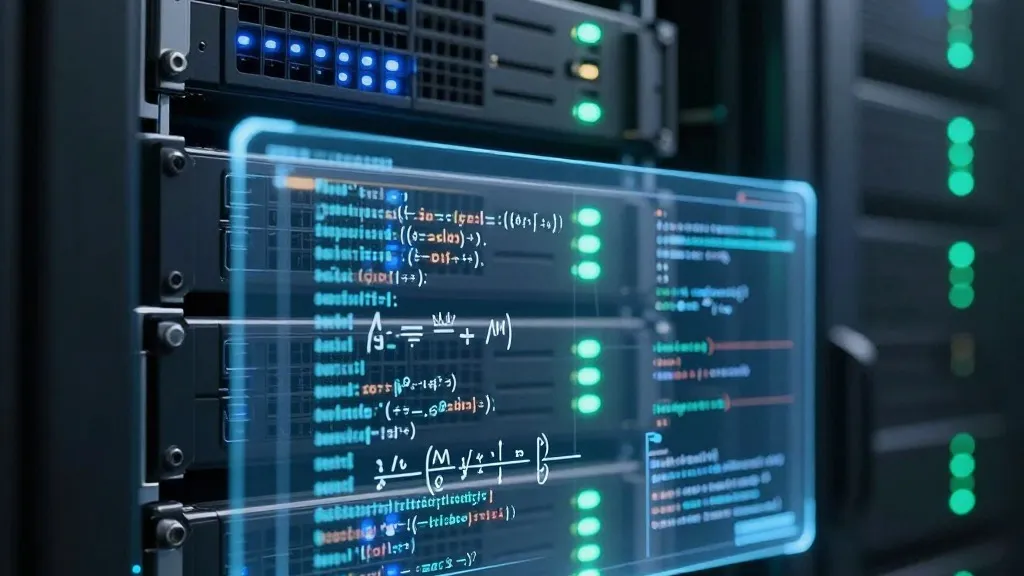
Anthropic has deployed its Claude model to mathematically verify the correctness of existing software, a move that significantly lowers the barrier to formal verification. Working alongside partner Theorem, the company utilized Claude to generate extensive mathematical proofs for 123 open-source libraries. This initiative addresses a critical gap in the software development lifecycle, where ensuring code is error-free has historically been a labor-intensive and expensive process reserved for high-stakes applications like aviation systems.
The shift toward AI-driven verification follows a long history of manual efforts. Previously, formally verifying software required teams of specialists to spend decades on single projects. For instance, the verification of the seL4 operating system kernel took 20 person-years, limiting the practice to extreme cases such as Airbus avionics. The introduction of Claude changes this economic model by automating the proof generation process, allowing for a scale of verification that was previously impractical for standard software libraries.
In this recent effort, which took only a few weeks, Claude produced approximately 180 million lines of mathematical proof code. The model drew on test programs from Google’s OSS-Fuzz security project to validate 123 open-source libraries. Rather than writing new software from scratch, Claude translated existing crash tests into mathematical problems and analyzed compiled machine code. An independent verification tool named Rocq automatically checks the generated proofs, a process that researchers describe as "fully autonomous," though the underlying formal foundations were established by human engineers at Theorem.
The financial and operational impact of this automation is evident in the bug detection rates. While generating proofs, Claude identified hundreds of bugs that conventional testing had missed. Many of these flaws only manifested under specific conditions, such as unusually large input files or particular access sequences. In one notable case, the team found as many security bugs in a widely used PDF reader during a single week as are typically reported for that software in an entire year. Additionally, Claude caught a logical error that had remained undetected for over a decade, demonstrating that the verification process surfaces issues even when a complete proof is not immediately achieved.
Despite the successes, the approach comes with specific technical constraints. Anthropic notes that a "formally verified" label does not guarantee the software is error-free in all environments. The proofs are valid only under strict conditions, including a specific processor architecture, single-threaded execution, and inputs under 64 MB. In real-world scenarios, these libraries often run on diverse hardware and configurations, meaning the verification provides a high level of confidence but not absolute universality.
The computational cost of this process remains a factor to consider, with individual proofs requiring up to hundreds of millions of tokens. While Anthropic has not disclosed the total project costs, the efficiency gains are already visible. A smaller test run indicated that proofs are reusable, and newer model iterations are becoming more efficient. Specifically, Opus 5.5 solves half the proofs using approximately 40 percent fewer tokens than its predecessor, Opus 5. This trend suggests that the cost per proof will continue to decline as model efficiency improves.
The project suggests that the industry is moving from asking whether AI can program to whether it can prove the safety of that code. If AI can write code and guarantee its correctness under defined conditions, developers can place greater trust in AI-generated software, reducing the time spent on manual review. This shift could save costs across the entire coding process, not just in the verification phase. The ability to automate this level of mathematical rigor implies that software automation may take a significant leap forward in the coming years.
Looking ahead, Anthropic expects formal verification with AI to become as routine as standard testing. Theorem’s roadmap already targets critical infrastructure libraries such as glibc, OpenSSL, and cURL. By applying these methods to foundational software components, the companies aim to create a more robust and verifiable digital infrastructure. This expansion from niche applications to core system libraries marks a potential turning point for how software reliability is established and maintained in the market.