Apple's 25-year-old iPod strategy relied on a $399 price point and 5GB hard drive
The original portable music player entered the market in 2001 with a premium price tag and a hard drive sourced from Toshiba to compete with flash-based rivals.
By Mateo Thompson ·
Apple CEO Steve Jobs officially introduced the original iPod on this day in 2001, positioning the device as a breakthrough product that was distinct from the company's computer lineup. The launch marked a significant commercial move for the Cupertino-based firm, which was in the midst of a successful turnaround following the dot-com bubble collapse. At the time, the company had already established strong consumer recognition for its iBooks and iMacs, creating a stable foundation for the introduction of a new category of portable hardware.
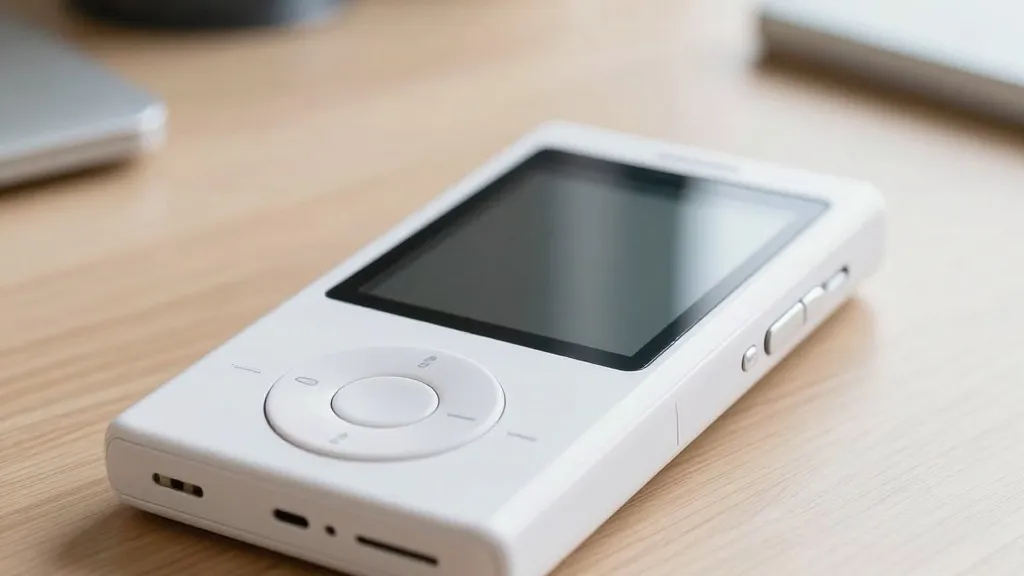
The device was priced at $399 and featured 5GB of storage capacity, a specification that allowed it to hold approximately 1,000 songs. This storage limit was calculated based on typical pop music tracks encoded at 160Kbps MP3 quality. Jobs argued that this capacity was sufficient to contain the entire music library of the average consumer. The hardware relied on a 1.8-inch hard drive from Toshiba, which was notably thin at 0.2 inches, enabling the final product to measure 2.4 by 4 by 0.78 inches and weigh just 6.5 ounces.
Market conditions at the time presented four primary options for portable digital music: standard CD players, MP3 CD players, flash memory players, and hard disk-based jukeboxes. Jobs identified the hard disk-based category as the optimal entry point because existing competitors, including Sony and smaller firms like Creative and Sonic Blue, had not yet perfected the user experience. The iPod was marketed as the first music player to utilize FireWire 400 for connectivity, a choice that offered significant speed advantages over the USB standards prevalent in that era.
The transfer speed was a key selling point, with Jobs claiming that an entire CD could be moved to the device in five to 10 seconds. In contrast, he noted that USB connections of that period required roughly five minutes for the same data transfer. For a full library of 1,000 songs, the estimated sync time was 10 minutes for the iPod, compared to five hours for a typical USB-based rival. The device also included a rechargeable lithium-polymer battery that provided 10 hours of playback and could be recharged to 80 percent in one hour.
The user interface was designed for single-hand operation, featuring a scroll wheel with piezoelectric clickers for tactile feedback. This hardware allowed users to navigate playlists, artists, and songs quickly. The launch was coordinated with the release of iTunes 2, which introduced Auto-Sync functionality. This feature ensured that music libraries curated on a Mac were automatically updated on the portable player whenever the device was connected for charging or data transfer. The iPod also functioned as a FireWire external hard drive when connected to a computer.
The product line remained a central part of Apple's portfolio for nearly two decades. The first iPhone did not arrive until early 2007, but the iPod continued to be sold alongside the smartphone for over ten years. The final model in the series, the 7th-generation iPod Touch, was released in May 2019. Although the line was left without updates for several years, Apple officially discontinued the product in May 2022, concluding a 25-year run for the original device.