Federal Judge Orders Trump Administration to Halt Demand for Setting Aside 20,000 California Ballots
Chief Judge James Boasberg ruled the executive branch likely violated the Elections Clause, forcing the Justice Department to pause its push to segregate votes just before the midterms.
By Ivan Mori ·
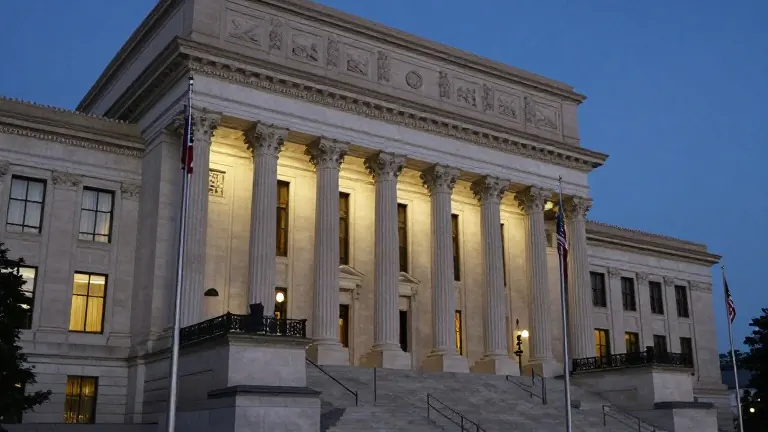
A federal judge in Washington ordered the Trump administration to stop demanding that California election officials separate roughly 20,000 ballots from voters the Department of Justice believes may not be citizens. Chief Judge James Boasberg issued the ruling on Monday, stating that the executive branch has likely violated the Constitution’s Elections Clause. That clause assigns authority over election rules exclusively to the states and Congress.
The decision arrives on the eve of the midterm elections, when millions of Californians will determine control of Congress. The Justice Department argues that the disputed ballots should be set aside until the voters’ citizenship status is verified. Solicitor General D. John Sauer wrote in a filing that once California commingles the challenged ballots with lawful ones, there is no way to retrieve them. The administration asked the Supreme Court for a limited injunction to enforce this separation while the legal case continues.
California officials contend the demand arrives too late in the voting process to be feasible. The state has mailed ballots to all roughly 23 million registered voters since early October. Hundreds of thousands of those ballots have already been processed. Bonta, the state’s Democratic attorney general, described the appeal as an attempt to undermine elections and trample on the rule of law. State election officials say the list of suspected noncitizens is riddled with errors and likely includes many U.S. citizens.
Lower courts have consistently sided with the state in this dispute. U.S. District Judge David O. Carter, a nominee of President Bill Clinton, forcefully denied the Justice Department’s initial request. He warned that the demand could disenfranchise citizens in Tuesday’s election. Carter wrote that if the executive can discount votes based on unproven allegations, the democracy is in danger. A divided appeals court panel upheld Carter’s order. Two judges, one appointed by Trump and one by Biden, voted in favor of California. A third judge, also appointed by Trump, dissented, arguing that California’s refusal encourages the violation of federal law.
The Trump administration has prioritized identifying noncitizen voters this year, a group that is statistically rare. The department has sought to move the case quickly, successfully appealing to the Supreme Court after a California judge declined to order the separation of ballots. This is the latest in a series of emergency appeals filed by the administration in its second term. The Supreme Court previously rejected the president’s push to restrict mail ballots ahead of the midterms.
The administration filed its emergency appeal to the high court on the same day Boasberg issued his order. The Justice Department’s strategy relies on halting the counting process immediately. It argues that the ballots cannot be un-commingled later. The state counters that the logistical burden of finding and removing specific ballots from a massive pile is impossible at this stage. The conflict centers on whether the federal government can override state procedures so close to election day.
Boasberg’s ruling does not resolve the underlying citizenship questions for the 20,000 voters. It only pauses the administration’s demand for immediate separation. The case remains active in the federal courts. The Supreme Court has not yet ruled on the merits of the emergency appeal. The next step in the legal process depends on the high court’s review of the lower court decisions.