California Turnout Race: 57 Million Early Votes Test Republican Ground Game
With polls open in California from 7 a.m. To 8 p.m., both parties focus on voter mobilization as 57 million early ballots set the stage for a decisive midterm.
By Mateo Thompson ·
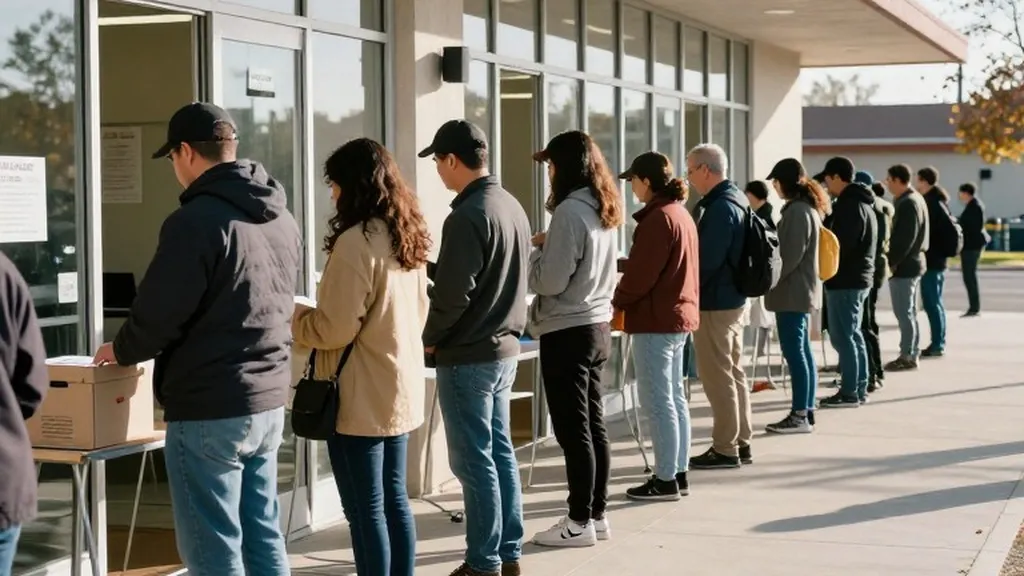
Voters across the United States are heading to the polls on Tuesday, November 3, 2026, to decide the balance of power in Congress during the final two years of President Donald Trump's second term. In California, where polls are open from 7 a.m. To 8 p.m., the state plays a critical role in the broader national narrative. Although there is no Senate race in California this cycle, the state is home to an open governor's seat that will shape the party's control of statehouses nationwide. The outcome in the Golden State, combined with performance in other battlegrounds, will determine if the president's party can withstand the typical midterm losses.
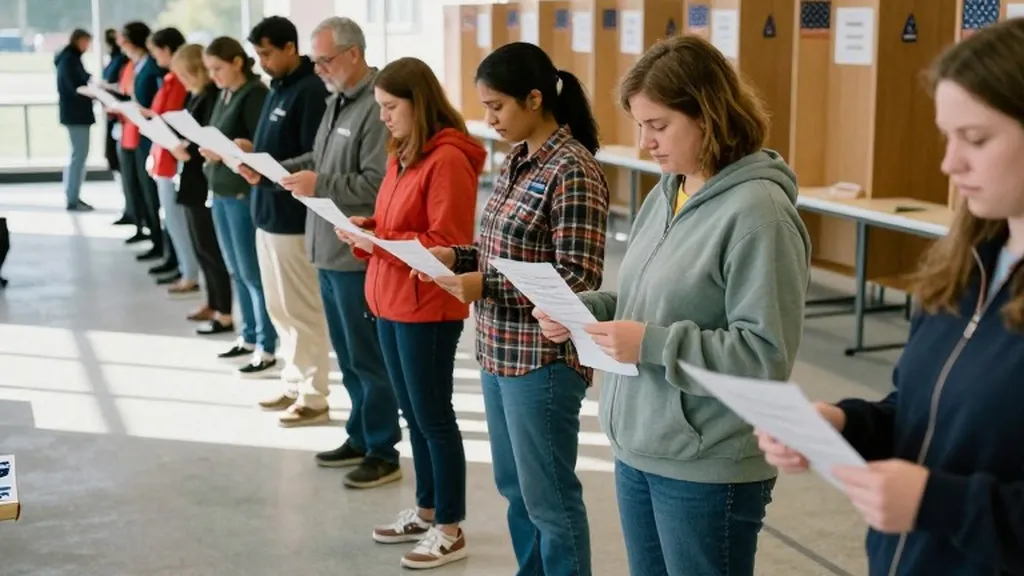
The scale of early voting has already set a new benchmark for this election cycle. More than 57 million people had cast their ballots by Monday, surpassing the early vote totals from four years ago in many closely watched states. This surge in early participation has shifted the strategic focus of both political parties toward the final push on Election Day. With a significant portion of the electorate already having voted, the remaining voters are becoming the primary target for get-out-the-vote efforts. The high number of early ballots suggests that the contest will be decided by who can mobilize the last group of undecided or less engaged voters effectively.
Republican leadership has emphasized that their path to victory relies heavily on turnout. RNC Chairman Joe Gruters stated that everything depends on turning out voters, asserting that if they achieve the necessary participation, they will win. This sentiment reflects the party's strategy to protect its Senate majority and limit losses in the House. Republicans hold 218 House seats and 53 Senate seats, and they can afford to lose no more than two House districts or two Senate seats to maintain control. The party is bracing for potential losses in the House while fighting to hold the Senate, with one or two seats in either chamber potentially tipping the balance of power.
Democratic leaders are adopting a cautiously optimistic tone, focusing on the anger of the American public regarding economic conditions. DCCC Chair Rep. Suzan DelBene noted that the American people are angry and want change. This message aligns with polling data and NORC, which found that 35 percent of U.S. Adults approve of Trump's job performance and only 25 percent approve of his handling of the economy. About seven in ten Americans say the country is heading in the wrong direction, with most blaming the president for high prices. Democrats need a net gain of three House districts and four Senate seats to take control of both chambers, a goal that appears challenging given the current seat distribution but possible if turnout remains high in key districts.
In California, the ground game is particularly intense despite the absence of a federal Senate race. The state is using new congressional maps after mid-decade redistricting, which may affect how votes are counted in the 46 battleground districts identified by Ballotpedia. Nineteen of the 36 governor's offices on the ballot are open seats, including California's, where the outcome will influence the national tally of governorships. Republicans currently hold 26 governor's offices, and Democrats 24. If Democrats can net two additional governorships, they will achieve a majority for the first time since 2010. The California race is therefore a pivotal component of the national strategy for both parties.
The economic mood is a central theme in the campaign, with voters citing high prices and taxes as primary concerns. In Raleigh, North Carolina, librarian James Moore expressed frustration about paying more for taxes, healthcare, and other essentials. This sentiment is echoed in polling data showing that most voters blame the president for the cost-of-living crisis. The election is a referendum on Trump's second term, with voters struggling with high prices and anger over an unpopular war with Iran. These issues are driving voter motivation, particularly among those who feel the current administration has not addressed their financial concerns adequately.
Republican candidates have largely kept a distance from President Trump, who held dozens of rallies in the final days before the election. Trump ended his rally schedule in Salina, Kansas, on Sunday, where he told supporters to pretend he was on the ballot. His administration has also been active in legal battles, including a lawsuit in Alaska related to the certification of the Senate result and a judge's order to stop demanding that California election officials segregate ballots cast by people on lists of suspected noncitizens. These legal moves have raised concerns among Democrats about potential interference and intimidation, with the Justice Department threatening to prosecute local election officials.
The financial aspect of the campaign has also been a factor, with the 2026 elections likely to be the most expensive in history. Republican committees outraised and outspent Democratic committees, aided by Trump-affiliated groups and Elon Musk, but Democrats outraised their opponents at the candidate level. 88.1 percent of Republican general election TV ad spending went to states and districts Trump won in 2024. This spending pattern suggests that Republicans are focusing on protecting their base while Democrats target competitive districts where the outcome is still in doubt.
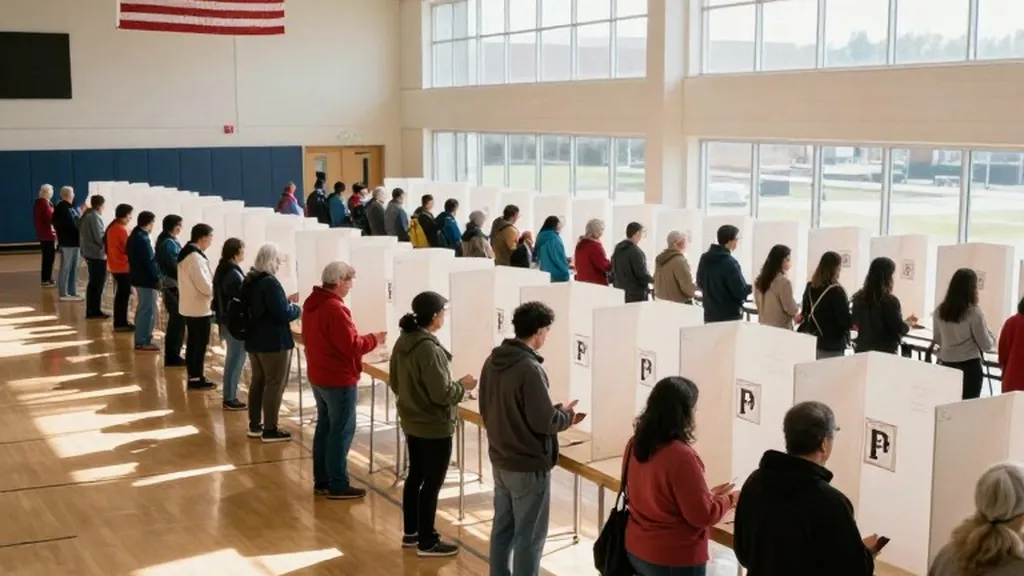
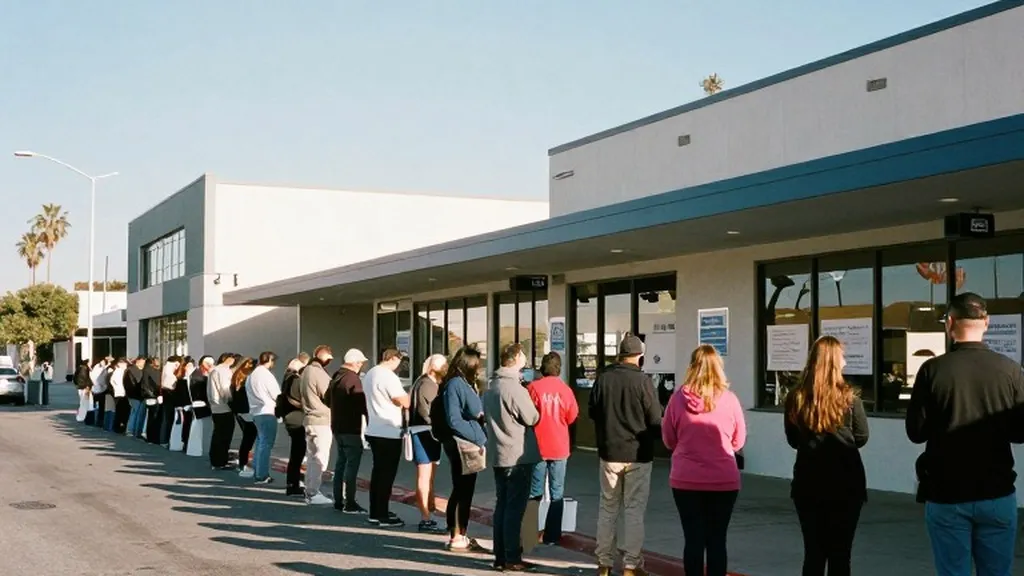
As polls open across the country, the focus turns to the final hours of voting. In California, voters can go to their local polling places, and anyone in line when polls close is entitled to vote. The U.S. Postal Service has added hours and staff to ensure that mail ballots are counted on time, a critical step given the state's largely mail-based voting system. The results will determine who controls Congress and, by extension, the legislative agenda for the next two years. If Democrats win even one chamber, investigations and possible impeachment proceedings become likely, with House Democratic Leader Hakeem Jeffries potentially becoming the first Black speaker.