Senate Math: The 13 Races and Four Seats Democrats Must Win
With polls open until 8 p.m. In California, the path to a Democratic majority hinges on flipping specific seats in the Midwest and South, while Republicans fight to keep their slim lead.
By Lauren Bello ·
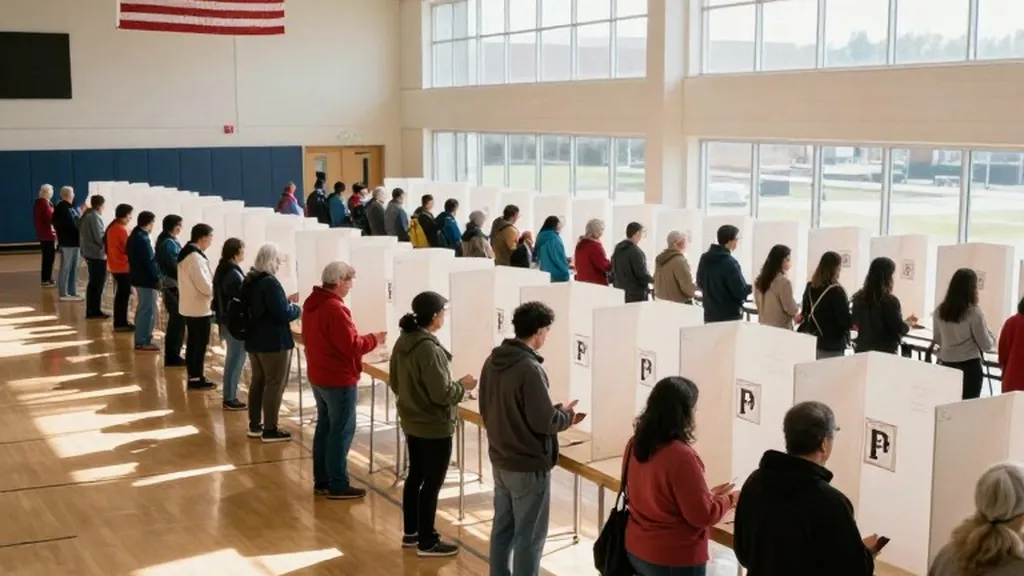
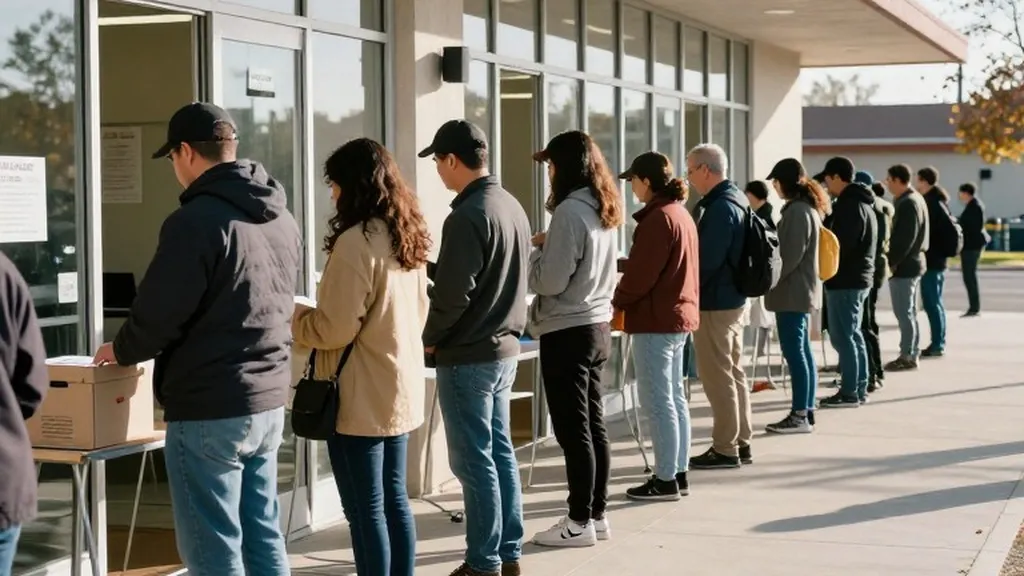
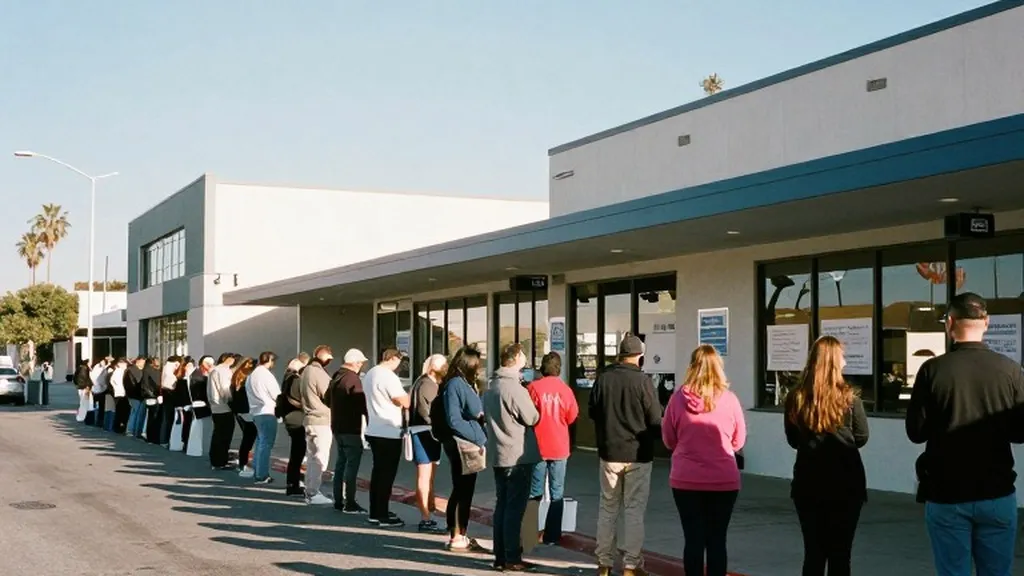
Voters across the nation are heading to the polls on this Tuesday, November 3, to decide the balance of power in the United States Senate for the final two years of President Donald Trump's second term. 35 of the 100 Senate seats are up for grabs in this midterm election. The race is particularly tight because Republicans currently hold 53 seats, while Democrats hold 45, with two independents who caucus with the Democratic party. For Democrats to seize control of the chamber, they need a net gain of four seats. In contrast, Republicans can afford to lose only two seats and still maintain their majority. This narrow margin means that the outcome of just a handful of races will determine which party controls the legislative agenda starting on January 3, 2027.
The Associated Press describes this election as a referendum on the president's second term, noting that voters are struggling with high prices and are angry over an unpopular war with Iran. Recent polling and NORC indicates that 35 percent of U.S. Adults approve of Trump's job performance, while only 25 percent approve of his handling of the economy. About seven in ten adults say the country is heading in the wrong direction, and most blame the president for rising costs. These economic concerns are central to the campaign narratives in the 13 battleground races that Ballotpedia has identified as key to the outcome. The stakes are high, as one or two seats could tip either chamber.
Republicans are bracing for the possibility of losing the House while fighting hard to hold the Senate. RNC Chairman Joe Gruters emphasized that everything depends on turnout, stating that if they turn out their voters, they win. This strategy is critical because many Republican candidates have kept their distance from the president's rallies, even as Trump has held dozens of events to energize his base. His final rally before Election Day was in Salina, Kansas, where he told the crowd he wanted them to pretend he was on the ballot. Meanwhile, Democrats are cautiously optimistic, with DCCC Chair Rep. Suzan DelBene saying that the American people are angry and want change. More than 57 million people had already voted as of Monday, surpassing early vote totals from four years ago in many closely watched states.
Among the 13 battlegrounds, the ratings vary significantly as of late October. Cook, Decision Desk, Inside Elections, and Sabato rate Maine as a toss-up on all four scales. Iowa is rated as a toss-up or leaning Republican, while Kansas is a toss-up to lean Republican. Alaska and Michigan are rated as toss-ups leaning Democratic, and Georgia is a lean to likely Democratic race. These ratings highlight the competitive nature of the contest, particularly in states like Maine, where economic strain and tariffs have made the state competitive. In Maine, Senator Susan Collins faces Democratic former state Senate President Troy Jackson in a race that could be pivotal for the party that controls the chamber.
Other key matchups include North Carolina, where Democratic former Governor Roy Cooper challenges former Republican National Committee chair Michael Whatley in a seat left open by the retirement of Senator Thom Tillis. Tillis retired after clashing with Trump, a dynamic that has played out in other races as well. In Georgia, Senator Jon Ossoff runs against Republican Representative Mike Collins. The AP notes that in Ohio, Democratic former Senator Sherrod Brown is challenging Republican Senator Jon Husted. In Michigan, Republican former Representative Mike Rogers faces Democrat Abdul El-Sayed. Notably, El-Sayed's former primary opponent Haley Stevens endorsed Rogers on Sunday, a move that could influence the final days of the campaign in the state.
In Texas, Republican Attorney General Ken Paxton, whom Trump backed over Senator John Cornyn in the primary, faces Democrat James Talarico. This race is particularly significant as Texas is a large state with a substantial number of electoral votes. In New Hampshire, Democratic Representative Chris Pappas runs against former Republican Senator John E. Sununu for the seat of retiring Senator Jeanne Shaheen. Minnesota also presents a complex race, with Democratic Lieutenant Governor Peggy Flanagan and Republican Michele Tafoya among four candidates for the seat of retiring Senator Tina Smith. Kansas, a reliably Republican state, has become central to the fight for Senate control, with the AP highlighting its importance in the broader context of the election.
Financial factors are also playing a role in this election, which is likely to be the most expensive in history. Republican committees have outraised and outspent Democratic committees at the committee level, helped by Trump-affiliated groups and Elon Musk. However, at the candidate level, Democrats have outraised their opponents. An AP analysis of AdImpact data shows that 88.1 percent of Republican general election TV ad spending went to states and districts Trump won in 2024, including more than 850 million dollars where he won by 10 points or more. This spending strategy reflects a focus on defending Republican holds in strong Republican areas, while Democrats have targeted more competitive districts.
Election administration has been a point of contention, with a federal judge temporarily barring the Trump administration from carrying out a plan to prevent noncitizen voting on Monday. Critics argue this risks disenfranchising eligible voters and infringes on states' authority over elections. In California, a judge ordered the administration to stop demanding that election officials segregate ballots cast by people on lists of suspected noncitizens. The U.S. Postal Service has added hours, staff, and special lines to ensure mail ballots are counted on time. These administrative issues have added layers of complexity to an already high-stakes election, with voters in California polling from 7 a.m. To 8 p.m. Local time.