How CU Denver Handles Snow Closures and Class Cancellations
The university outlines specific rules for delayed starts, early dismissals, and attendance expectations during winter weather events.
By Lauren Bello ·
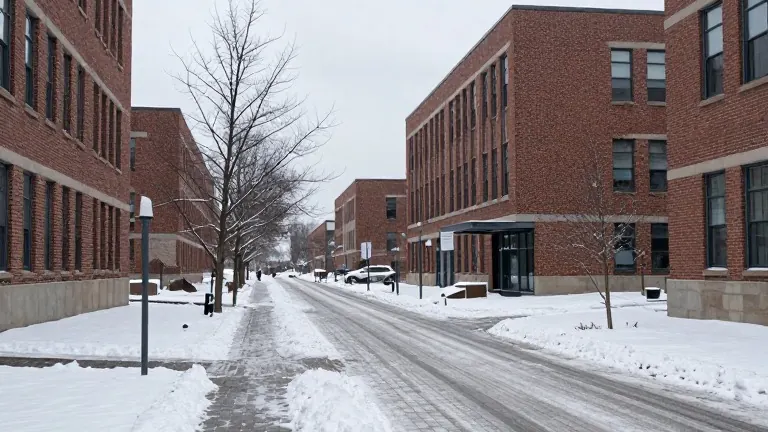
As winter temperatures approach in Denver, University of Colorado Denver is clarifying its protocols for snowy or icy conditions. The institution has released a guide detailing how it manages campus operations when inclement weather forces closures, delayed starts, or early dismissals.
The primary method for communicating these decisions is the official university email address. All students, faculty, and staff will receive an alert there if a change is announced. The university advises individuals to also register a personal email and cell phone number in their emergency alert settings to ensure they receive updates. Those needing to update their contact information can use the Emergency Management and Campus Safety website. For real-time updates, people can call 1-877-556-3637, check the website ahec.edu, or monitor social media channels after 5:30 a.m. on the day of the weather event.
When a delayed start is declared, any in-person or synchronous class scheduled to begin before the new start time is cancelled. There is no automatic institutional policy to reschedule these missed classes. Faculty members who wish to hold a make-up session must discuss the arrangement with their department chair. Students should contact their professors directly to clarify any rescheduling plans.
If the university orders an early dismissal, any class scheduled to begin after the dismissal time is cancelled. Classes that run across the dismissal time are also cancelled entirely. For instance, if the campus closes at 2 p.m., a class scheduled from 1 to 3 p.m. would not meet. This rule applies to both in-person and synchronous sessions.
During a full campus closure, mandatory attendance policies are suspended. Faculty cannot require students to attend in-person or synchronous classes. Essential personnel, such as facilities staff, are pre-identified and must report to work. Staff in Central Services and Administration who support both CU Denver and CU Anschutz must check with their supervisors. Other Denver campus staff do not need to report and may work remotely if they choose. Non-critical service employees are not expected to work during a closure.
Despite the closure of physical spaces, academic and professional obligations remain. Students are still responsible for classroom content scheduled on the closure day and must plan to complete those requirements on a different date. Similarly, employees are accountable for work duties that would have occurred during the closure. They are expected to coordinate with their supervisors to determine how and when to fulfill those outstanding tasks.