LaVell Edwards transformed BYU football by betting on the forward pass
The head coach shifted the program from a rushing attack to a passing one, hiring key personnel who executed his vision.
By Lauren Bello ·
In 1971, the average American home price sat at $25,200 while the minimum wage remained at $1.60 per hour. That same year, LaVell Edwards was summoned to a meeting with BYU President Dallin H. Oaks, a conversation that launched a coaching career defined by tactical risk and personnel management.
John Edwards, LaVell’s oldest son, recalled that the hiring process was informal. President Oaks told his father he was a good coach and easy to work with before asking if he wanted the head coaching job. After a brief pause, Oaks instructed his father to call the sports information office to announce his own hiring. Edwards took the position and led the Cougars for 29 years.
The program’s identity shifted under Edwards’ direction. The team moved away from a running offense that once featured the nation’s leading rusher, Pete Van Valkenburg. Instead, Edwards committed to a passing attack. This change was not driven by a preference for speed, but by a defensive perspective. Edwards, who had served as a defensive coordinator, recognized that passing teams created problems for opponents that were difficult to solve.
Andy Reid, a former BYU offensive lineman and graduate assistant who later became a veteran NFL coach, noted that Edwards understood the value of disciplined route runners. Reid explained that Edwards believed quickness could counter speed and that the coaching staff could find quarterbacks with the arm talent to execute the plan. The decision to throw the ball, even at the goal line, was a strategic statement that defenses struggled to answer.
Edwards implemented this vision by hiring specialists. He brought in coaches Dave Kragthorpe, Doug Scovil, Mike Holmgren, and Norm Chow to build the offense. Marc Wilson, a BYU Hall of Fame quarterback, credited Scovil, Holmgren, and Chow with understanding the passing game. Edwards allowed these experts to operate, a management style that Ty Detmer, another Heisman Trophy winner, compared to a CEO who lays out a plan and then lets the team do the work.
The leadership style emphasized stability. Glen Kozlowski, a former receiver, observed that Edwards rarely scolded coaches in front of players, even when staff meetings grew heated. President Jeffrey R. Holland, who served as BYU president from 1980 to 1989, described Edwards as a man without ego. Holland noted that Edwards did not need to take credit for the passing game and remained consistent in his highs and lows.
The system relied on a specific type of player. Edwards identified quarterbacks who could throw and linemen who could protect them. He prioritized character alongside athletic ability, seeking men who could lead by example. This approach produced a roster of Hall of Fame quarterbacks, including Steve Young, Jim McMahon, and Robbie Bosco, who led the team to the 1984 national championship.
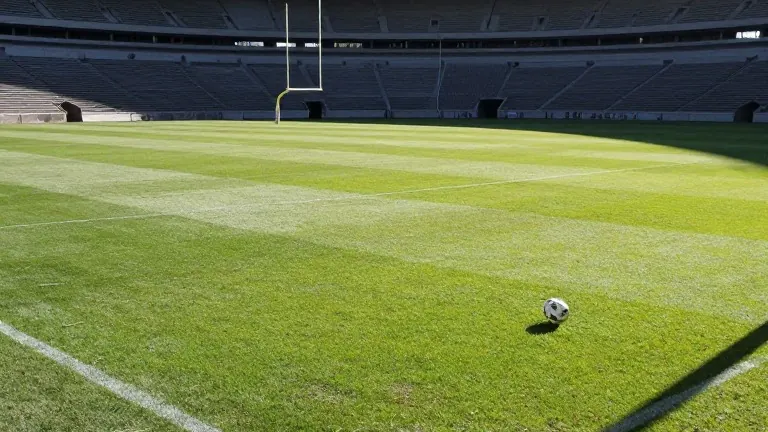
The coaching philosophy was most visible in high-pressure moments. On Sept. 8, 1979, BYU trailed No. 14 Texas A&M by one point with seconds remaining. After a pass connected with Clay Brown to make the score 17-16, Edwards called a timeout. He had already decided to attempt a two-point conversion if they scored. Wilson asked about the play choice and suggested a route he had barely practiced. Edwards agreed, trusting his quarterback’s judgment over his own preference.
Wilson faked a handoff to fullback Mike Lacey and then threw a short pass for the conversion. The move gave BYU an 18-17 victory. Lacey, who had just returned from a mission to Costa Rica, said his knees shook as he ran the route. The win demonstrated the effectiveness of the passing system and the trust Edwards placed in his staff and players to execute unconventional plays.