Nvidia CEO's Duck Demo Sparks 20,000 Preorders for Tiny Robots
A lighthearted moment at a tech conference in Berlin has driven massive demand for a small robotic duck that is expected to arrive before the holidays.
By Mateo Thompson ·
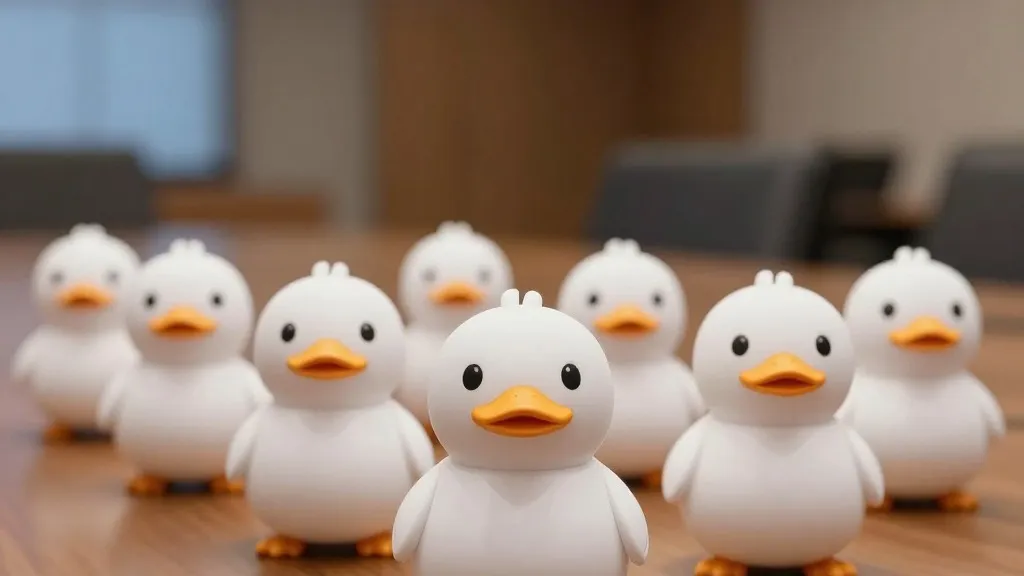
Jensen Huang, the chief executive of Nvidia, captivated a global audience earlier this week by demonstrating a flock of small, waddling robots during the company's GTC conference in Berlin. The video of the demonstration quickly spread across social media, showcasing the Microducks as they stomped their feet, performed somersaults on voice command, and even lay down to simulate naps. The charming display featured the tiny machines making sounds reminiscent of the famous astromech droid from Star Wars, turning a standard corporate keynote into a viral sensation.
The immediate response from consumers was significant. By the day following the demonstration, preorders for the Microducks had exceeded 20,000 units. Clem Delangue, the head of Hugging Face, confirmed these figures in a public post, noting the rapid uptake of the device. This surge in interest has positioned the robots as a strong contender for the most popular toy of the holiday season, with delivery expected in time for Christmas.
Delangue suggested that these devices might become the best-selling robots of the year. He noted that the appeal is not limited to children, as promotional materials feature adults interacting with the units as well. This broader demographic appeal suggests that the Microducks are being marketed as a novelty item for tech enthusiasts and gift-givers across all age groups, rather than just a traditional children's product.
The Microducks are produced by Pollen Robotics, a firm that was acquired by Hugging Face in 2025. Since Nvidia purchased Hugging Face in September, the robot manufacturer is now technically part of the GPU giant's portfolio. This marks the second robot product from the Hugging Face stable, following the release of the Reachy Mini, which also gained attention for its design and capabilities.
Technically, the devices are built on an open-source platform. They were trained using Nvidia's technology stack, where simulated versions of the robots were taught basic movements such as walking, sitting, and standing. These foundational behaviors are included in the units as they ship to customers. The open nature of the project allows owners to train their specific robots on new tricks and share those custom behaviors with the wider community, fostering a collaborative ecosystem around the hardware.
The timing of this viral moment coincides with a week in which the artificial intelligence industry faced criticism over its role in various cyberattacks. Amidst a climate of concern regarding AI safety and security, the Microduck demonstration offered a lighter, more accessible view of the technology. The video served as a counterpoint to the heavier news cycle, reminding viewers that AI applications can be playful and engaging in addition to being complex and powerful.
The success of the Microducks highlights the potential for consumer robotics to move beyond utilitarian functions into the realm of entertainment and companionship. The ability of the robots to respond to voice commands and perform physical actions creates an intuitive interface for users. The rapid preorder growth indicates a strong appetite for tangible, interactive AI devices that can fit into a home environment.
With deliveries scheduled before the holiday rush, the Microducks are likely to appear in living rooms and offices across California and beyond. The combination of low-cost manufacturing, open-source software, and high-profile endorsement by a major tech figure has created a perfect storm for market success. As the units begin to arrive, the community will likely start sharing new tricks and behaviors, further extending the life and popularity of the device.
For Nvidia, the success of the Microducks represents a broader strategy to embed its software and hardware into consumer products. By leveraging its acquisition of Hugging Face and Pollen Robotics, the company is expanding its reach into the physical world of robotics. The viral nature of the launch ensures that the technology is recognized not just by engineers, but by the general public, potentially driving long-term adoption of AI-driven personal devices.