Scientists Attach Tiny Radios to Monarchs to Map Migration
A tri-national team is using lightweight solar-powered tags to identify critical stopover sites for butterflies traveling between North America and Mexico.
By Lauren Bello ·
Rebeca Quiñonez-Piñón spent her childhood wondering where monarch butterflies stopped to rest during their long journeys. That question now drives a large-scale scientific effort to map the precise routes and resting places of these insects across the continent.
The migration covers approximately 3,000 miles from southern Canada to the oyamel fir forests of central Mexico. This wintering ground is a protected biosphere reserve and a World Heritage site. For decades, researchers lacked clear data on daily flight distances and nightly settlement locations. This year, a team attached solar-powered radio tags to nearly 1,750 monarchs to fill that gap.
The National Wildlife Federation recently joined this tri-national science initiative. Quiñonez-Piñón leads a study combining real-time tracking with community science to monitor butterflies in Texas. Many monarchs from east of the Rockies pass through a narrow corridor called the Texas funnel. Their path varies by year depending on the availability of water, nectar, and trees for shelter.
Data collected since last year has revealed new connections between populations. Scientists found the first evidence of a monarch from Utah, west of the Rockies, joining eastern butterflies in Mexico. Other tagged insects traveled down the Eastern Seaboard to Florida, crossed the Gulf of Mexico, and are now moving through Mexico. Emma Pelton, a senior conservation biologist with the Xerces Society for Invertebrate Conservation, noted that these unique path connections were previously only hypothesized.
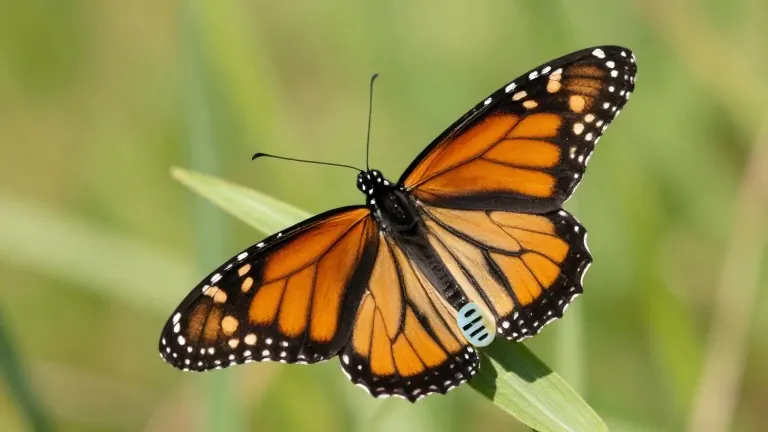
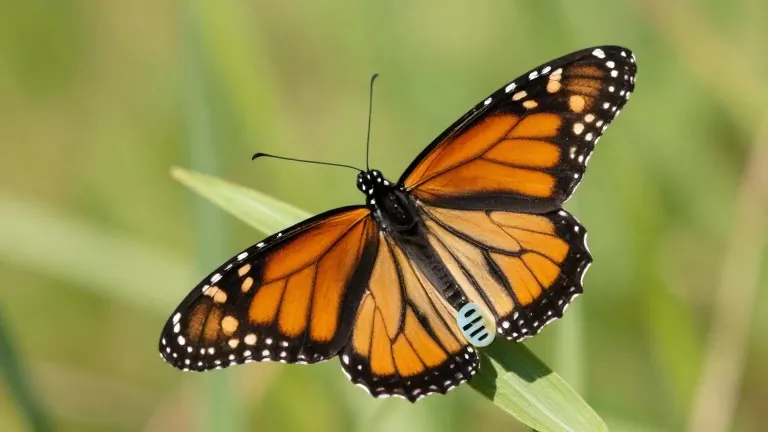
About 175 tagged butterflies have been detected in Mexico since the current migration began. The new devices weigh about as much as a drop of water and cost roughly $200 each. David La Puma, vice president of global market development for Cellular Tracking Technologies, said most tagged butterflies weigh more than 400 milligrams. This weight limit ensures the tags do not overburden the insects during flight.
The tagging process requires precision. Researchers catch butterflies with nets and cool them to reduce movement. They position the insect on a specialized board to protect its legs and antennae. Adhesive is applied to the abdomen using a cotton swab before the transmitter is gently pressed onto the body. Quiñonez-Piñón stated that when the device is attached correctly by trained personnel, the monarch remains completely safe.
Louie Yang, an insect ecologist at the University of California, Davis, described the technology as remarkable. He noted that it allows scientists to see paths and speeds that were previously invisible. However, Yang pointed out that the signals indicate receiver locations rather than exact positions. He also noted that further studies are needed to determine if the tags affect butterfly behavior.
Eastern monarch populations have declined by more than 80% since the mid-1990s. Western populations have dropped by about 95%. Pesticides and climate change remain primary threats. Tierra Curry, a senior scientist with the Center for Biological Diversity, said prolonged heat in the north can delay migration cues. A court recently ordered the federal government to make a final decision on protections for monarchs by 2030.