Global study: 86% of teens miss daily exercise target
A Lancet Global Health analysis of 3 million adolescents across 140 countries shows a persistent gender gap and a flat fifteen-year trend in physical activity.
By Ivan Mori ·
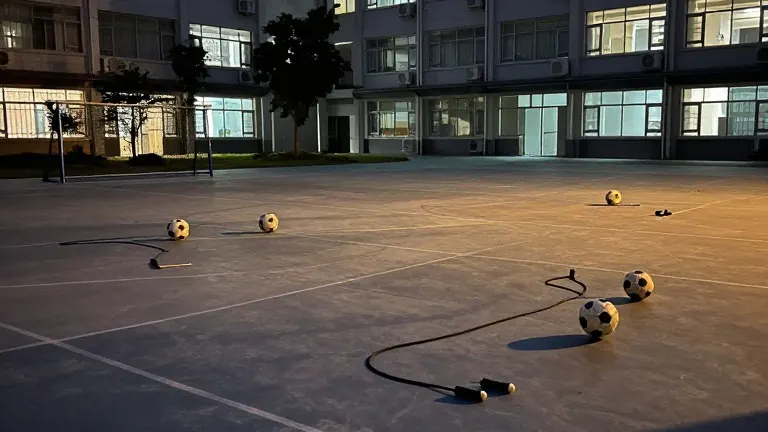
Researchers published a new study in The Lancet Global Health finding that only 14% of adolescents worldwide meet the recommended daily standard for physical activity. The World Health Organization advises that teenagers engage in at least 60 minutes of moderate to vigorous exercise each day. This level of activity includes brisk walking or playing pickup soccer. The study indicates that the majority of young people globally fall short of this benchmark.
The analysis examined survey data from over 3 million adolescents across 140 countries. The surveys asked participants how many days in the previous week they were active for at least an hour. Globally, the average adolescent reported only less than three active days per week. One in four teens reported not hitting the 60-minute mark on any day of the week. The data covers a fifteen-year period, revealing that overall trends in adolescent physical activity have remained flat.
Fiona Bull, head of the physical activity unit at the World Health Organization, co-authored the study. She described the findings as disappointing because the lack of progress over the last decade and a half suggests current strategies are ineffective. Bull stated that the data calls for a reevaluation of current approaches. She noted that business as usual will not change these trends.
The report identified a consistent gender gap across nearly all countries surveyed. Girls were less active than boys in almost every location. Nearly 30% of girls reported zero days of physical activity during the week, compared to 22% of boys. Only 11% of girls met the daily activity target, while 17% of boys did. The weekly average for girls was 2.4 active days, lower than the 3-day average for boys. Bull called this early gender difference worrying, noting it often persists into adulthood.
Solveig Cunningham, a global health researcher at Emory University, explained that cultural norms often drive this divergence. In many places, taboos around physical activity emerge when girls reach puberty. Cunningham cited research in India where family members discourage girls from spending time outside to prevent their skin from darkening. She noted that while girls often perform active chores inside, this differs in intensity and context from boys playing outside.
Adolescents from middle- and lower-income countries reported lower levels of exercise than those in wealthier Western nations. Andrea Ramirez Varela, an epidemiologist at the University of Texas Health Science Center in Houston, described physical activity as an issue of opportunity. She explained that environmental factors in lower-income areas often restrict movement. In many urban centers, parents view it as unsafe for children to walk alone, and air pollution can make outdoor activity unhealthy.
Varela also pointed to screen time as a factor. She observed that after school, many adolescents spend their time watching television or using digital devices. This leads to sedentary behavior for the rest of the day. The study suggests that countries with higher adolescent exercise levels tend to have structured sports time during or after the school day. Varela stated that focusing on schools is a practical way to move the needle, as this is where adolescents spend most of their time.