Machado Returns Home as US Secures 100-Year Oil Concession
The opposition leader arrived in Caracas after 10 months in exile, a move that follows a massive energy deal between Washington and the interim government.
By Mateo Thompson ·
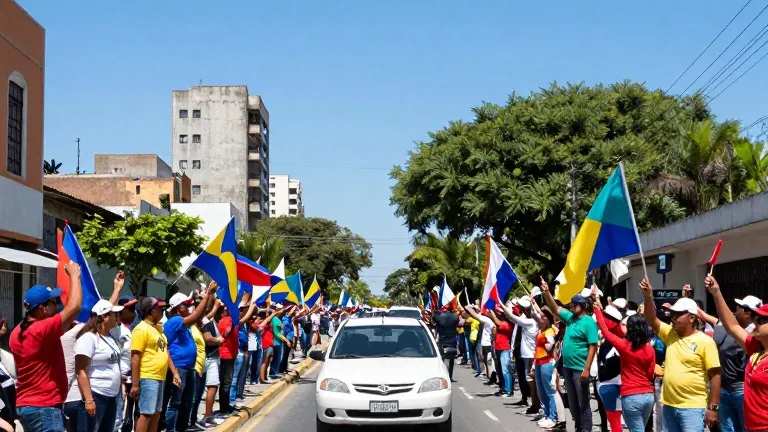
Maria Corina Machado arrived in Caracas on Monday after a 10-month absence from Venezuela.
The opposition leader traveled by car from the western state of Lara to the capital, where crowds lined the route. Her return marks a sharp contrast to her departure in December 2025, when she left the country at night to accept the Nobel Peace Prize in Oslo.
Machado had been blocked from re-entering Venezuela by the government on multiple occasions. The Trump administration also delayed her return, stating that the timing was not favorable. That hesitation appears to have ended with the recent signing of a major bilateral energy agreement.
The deal grants the United States a 100-year concession for 65 billion barrels of Venezuelan crude oil. It was reached in conjunction with North American Blue Energy Partners, a private company led by businessman Alejandro Betancourt. Machado has publicly criticized the agreement. She directed her critique primarily at the interim government and Betancourt, while maintaining a respectful distance from President Trump, to whom she dedicated her Nobel Peace Prize.
The political landscape in Venezuela has shifted dramatically since Machado left. President Nicolas Maduro was removed by US troops on 3 January and is currently in New York facing charges of drugs, weapons, and torture offenses. He has pleaded not guilty. He was replaced by his former vice-president, Delcy Rodriguez. Rodriguez has established a cooperative relationship with Washington, a stark change from the mutual animosity that characterized the previous administrations.
President Trump has expressed satisfaction with Rodriguez, describing her as wonderful and a terrific person. This praise comes from a leader who previously labeled the Maduro administration as narco-communists. Despite Trump's support for Rodriguez, the crowd turnout for Machado in Caracas suggests she retains strong grassroots support. Beningno Alarcon, a Venezuelan political analyst, called her return the most important political event since 3 January.
Alarcon noted that Machado's presence on the ground strengthens the opposition's position compared to its time in exile. A joint study by the think tanks Polis and Nexo indicates that Venezuela experienced three times as many street protests in the first nine months of 2026 as in all of 2025. The data also shows that repression of these protests has fallen by more than half.
US Secretary of State Marco Rubio stated that Machado's safe return was a direct result of US-supported reconciliation talks. Machado still faces charges in Venezuela ranging from treason to conspiracy of insurrection. She and her allies have long dismissed these legal actions as politically motivated. She made at least eight prior attempts to return by air and sea before receiving the current administration's approval.
Interim President Rodriguez described the cross-country event as a show. State television ignored the livestreamed procession, while Rodriguez indicated she might be prepared to hold talks with Machado. Reports suggest that Secretary Rubio influences major decision-making in Venezuela through regular communication with Rodriguez. Trump has made clear that Washington expects full submission and malleability from the interim leader on energy issues.
Machado's return is scheduled to influence ongoing negotiations between the government and the opposition. The interim government needs a harmonious relationship with Washington to avoid a similar fate to Maduro. Machado's supporters in Caracas said their fear of demanding change is fading as the political transition moves forward.