War drives up crop prices, offering farmers a break after bad harvest
Diesel costs have more than doubled in a year, but higher market prices for corn and soybeans are helping offset the expense for growers in Minnesota.
By Lauren Bello ·
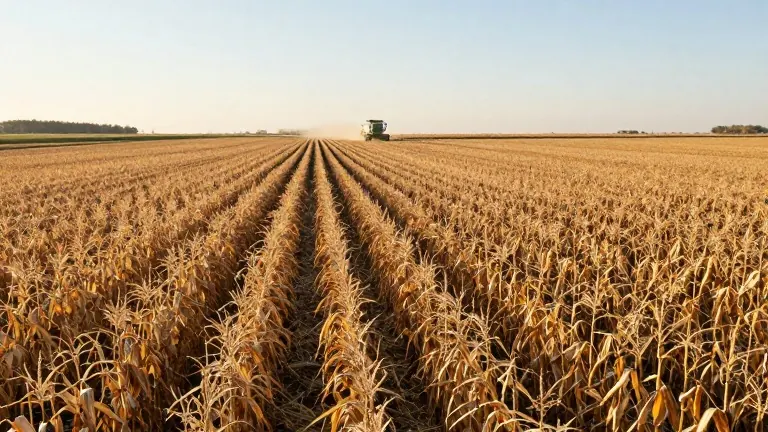
Megan Horsager stands in a field near Montevideo, Minnesota, watching her crops dry in the October sun. She is in the process of buying the family farm from her father, Marc Stevens. The transition is stressful, but the current harvest offers a sense of relief that was missing a year ago. Her 750 acres of sugar beets, soybeans, and alfalfa are ready for pickup. Nearby, 1,200 acres of corn stand thick with dried ears. Horsager said the team is feeling optimistic about the season ahead.
The improvement comes after a difficult 2025 growing season that left many farmers worried about foreclosure. In 2026, international conflict has made planting more expensive. However, the same war has reduced global supply, driving up prices for American harvests. This price increase is helping to offset the high costs of production. Farmers are seeing more cash coming in than they did in the spring.
Diesel costs remain a major burden. AAA reported that diesel prices in Minnesota rose from $3.57 to $6.13 per gallon over the past year. At Horsager’s farm, a combine uses 26 gallons of diesel per hour. The expense could have been much higher if she had not filled her reserves a month and a half ago. Her father believes the higher crop prices will cover the increased fuel bill.
Not every farm is seeing the same benefit. In northwestern Minnesota, drought conditions were severe. Pam Vipond, who grows corn and soybeans on more than 1,200 acres in Mahnomen County, reported that her soybean yield is about half of last year’s production. She said the rain stopped around July 4. Farmers further west have it even harder, with some corn plants producing no ears at all.
The U.S. Department of Agriculture reported on Oct. 13 that 61% of Minnesota’s corn crop is in good or excellent condition. Soybean crops show the same percentage. Last year’s data for the same week is unavailable due to a government shutdown. Despite the mixed field conditions, market prices have rallied. Corn futures are up about 18% from this time last year. Soybean prices have increased by about 27%.
The U.S.-Israeli war against Iran began in late February. The conflict quickly raised the cost of fertilizer. It also created uncertainty in global trade. John Griffith, an executive vice president at the farming cooperative CHS, said the war and trade disruptions are pushing prices up. He noted that attacks on Eastern European exports are adding to the fear in the marketplace. That fear translates into higher prices for buyers.
Dan Glessing, president of the Minnesota Farm Bureau, said the price rise has helped corn growers move from a loss to a break-even point. Soybean profitability has improved even more. However, Glessing noted that fuel prices will eat into some of those gains. The volatility of recent years has made business decisions riskier. Choosing when to buy fuel, fertilizer, and seeds now involves more uncertainty than in the past.
The U.S. Department of Agriculture’s Economic Research Service forecasts that total crop revenue will rise in 2026. Government support for farmers is also expected to increase. Aid is projected to jump from $27.9 billion in 2025 to $47.4 billion in 2026. This increase is partly due to the Farmer Bridge Assistance program. The federal government launched that program in 2025 after a trade war with China threatened U.S. exports.
Horsager said the volatility has made buying the farm way harder. She is taking over from her father, who acquired the land from his own father years ago. Stevens hopes his children will continue the family legacy. His son played in an empty grain bin while Horsager watched. Stevens believes the government should play a smaller role in farm economics. He said supply and demand should fix the market. If the government stays out of the way, he said, those who can figure it out will survive.
The current situation offers a short-term financial boost for some Minnesota farmers. Higher prices are helping to pay down debt from previous bad years. The war continues to affect diesel costs, but it is also creating scarcity that benefits sellers. The coming months will test whether these gains can hold up against ongoing global conflicts and trade shifts.
More Business · Watch Your Wallet · Report a business · Got a Story?