Breaking: Democrats' Data Center Wins Trigger $2.5T Tech Selloff
The S&P 500 fell 4.3 percent and the Nasdaq dropped 5.5 percent as investors reacted to state-level restrictions on AI infrastructure.
By Ivan Mori ·
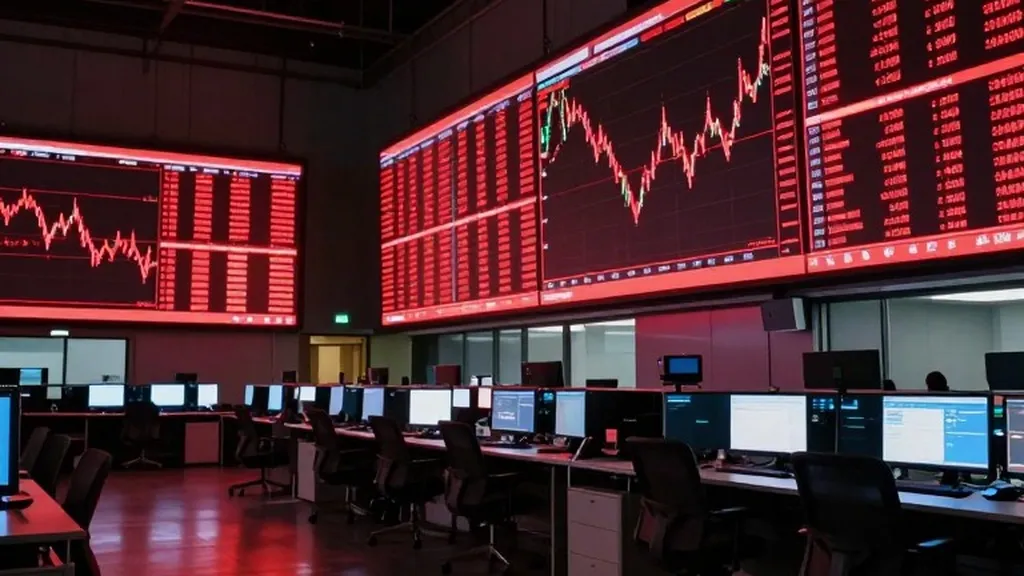
The stock market suffered a severe sell-off on Thursday as investors reacted to the Democratic sweep of Congress and key governor races. The Dow Jones Industrial Average fell more than 1,800 points, a drop of 3.4 percent, to close at 51,868. The S&P 500 declined 4.3 percent, marking its worst day since April 2025. The Nasdaq Composite fell 5.5 percent, its worst single-day performance in 18 months. This decline placed the index more than 11 percent below the record it set last month. An estimated 2.5 trillion dollars in market value was wiped from the Nasdaq Composite during the session.
The selling pressure was concentrated in the technology sector. The so-called Magnificent Seven technology companies, which include Apple, Nvidia, and Tesla, shed about 1 trillion dollars in value in the single trading day. Nvidia fell 9.2 percent, losing more than 400 billion dollars in market value. Tesla dropped nearly 11 percent and SpaceX fell 8 percent. The Philadelphia Semiconductor Index, which tracks 30 of the largest chip companies, fell more than 12 percent. This index is now almost 40 percent below its peak in June. The iShares Semiconductor ETF fell 12 percent, its worst day since the breakout in March 2020.
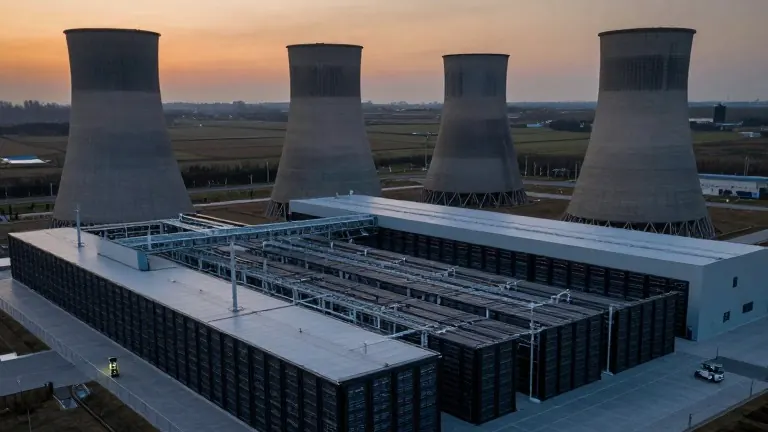
The primary catalyst for the crash was the political shift toward Democrats. Democrats won control of both the House and Senate in Tuesday's midterm elections. Campaigns across the country focused on slowing the spread of data centers and artificial intelligence infrastructure. Dozens of ballot measures aimed at restricting data center development appeared on local ballots. Voters rejected these facilities in a series of local votes. This political momentum raised immediate concerns about the future of the AI build-out. Investors feared that new state-level regulations would impose significant hurdles on construction projects.
Gina Hinojosa won the race for governor in Texas after campaigning on an immediate moratorium on new data center construction. Democratic victories in states with large concentrations of planned data centers, including Ohio and Texas, heightened market anxiety. These states are critical to the current infrastructure expansion. The market interpreted these wins as a signal that the pace of data center build-out would slow. This prospect pressured companies tied to the artificial intelligence trade. Broader concerns that huge sums spent on AI might not pay off also contributed to the selling.
The day's trading reversed the optimism seen on Wednesday. Wall Street had recorded its biggest daily gain in months on Wednesday as investors anticipated that Democratic success could restrain the White House. President Trump noted the record high on Truth Social, stating that 401(k)s were through the roof. However, the mood shifted rapidly on Thursday. The Cboe Volatility Index, or VIX, jumped as much as 5.7 points to above 28 about 90 minutes after the opening bell. This was its highest reading since March 31, 2026. The VIX was up 61 percent on the day. By midday, nearly 800,000 VIX call options had traded, which was 3.5 times the 30-day average.
Analysts described the reaction as a capitulation event. Neil Wilson, investor strategist at Saxo UK, said a complete capitulation-level event was playing out in tech stocks. He noted that the fear was a total momentum unwind as Democrats paced the frontier and kiboshed the data center buildout. Dan Ives, a tech analyst, stated that Democrats taking control, especially over the Senate, would create major hurdles for AI and tech legislation. He said the midterm results were a clear sign that the pace of data center build-out would start to slow. Ted Parkhill, founder of Incline Investment Management, said the market was moving from the promise of AI to the price of AI.
Susannah Streeter, chief investment strategist at Wealth Club, said fresh panic over the AI trade had hit Wall Street hard. She noted that fears that vast sums poured into AI infrastructure may not deliver returns were colliding with the prospect of a sharp slowdown in data center construction. Gene Goldman, chief investment officer at Cetera Financial Group, said the sell-off had become exaggerated as selling accelerated through the day. He predicted a recovery, noting that corrections in a bull market are typically short lived. Frank Cappelleri, founder of CappThesis, pointed out that the Nasdaq was higher 12 months after the election in all but one of 13 midterm cycles since 1974, but cautioned that the path can be volatile.
Technical indicators showed significant stress in the market. The 10-year Treasury yield fell to 4.83 percent, its lowest since September, as investors bought bonds as a haven. In London, the FTSE 100 closed down 46 points, or 0.4 percent, at 10,782.66, after an early rally in Europe fizzled. The selling spread through every sector of the S&P 500 and gathered pace through the day. SanDisk fell more than 22 percent and Western Digital fell 17 percent. AMD and Micron each fell more than 17 percent, while Intel fell 10.3 percent. The breadth of the decline indicated a broad-based loss of confidence in the tech sector's near-term outlook.
The tech industry has already begun responding to the political climate. Greg Brockman, president and co-founder of OpenAI, said everyone had been surprised by the reaction to data centers. He stated that more work was needed to bring communities on board. He noted that from San Francisco, trying to build infrastructure in Texas and Georgia, one cannot just tweet that it is going to be good. Dina Powell McCormick, president of Meta, told the same conference that the industry needed to double and triple down on telling the story. These comments highlighted the growing emphasis on community engagement and communication in the face of new political headwinds.
More Business · Watch Your Wallet · Report a business · Got a Story?