Cryonics in Scottsdale: Alcor Members Bet $220,000 on Future Medicine
A small Arizona nonprofit is preserving bodies and heads in liquid nitrogen at -320 degrees, relying on a process called vitrification to wait for future medical breakthroughs.
By Lauren Bello ·
Alcor members in Scottsdale, Arizona, are paying tens of thousands of dollars to be frozen after legal death, betting that future technology can revive them. The organization, the Alcor Life Extension Foundation, operates out of an industrial building and has practiced cryonics since the 1970s. Its primary goal is not immediate resurrection, but the preservation of biological material until science advances sufficiently to repair and restart life.
The preservation process relies on vitrification, a technique that uses chemicals and controlled cooling to stop ice crystals from forming inside cells. CEO James Arrowood explained that a solution called M22 acts as a biological antifreeze, keeping the tissue intact even while the exterior is frozen. This method prevents the cellular damage typically caused by standard freezing. Arrowood noted that if vitrification proves reliable, it could also improve organ donation and transplantation by reducing tissue degradation over time.
When an Alcor member dies, a specialized rapid response team known as DART arrives at the scene. This team, composed of medically trained personnel including former military members, begins cooling the body immediately after legal death is declared. The subsequent preparation process takes approximately one week. During this time, Alcor staff replace the patient's blood with preservation solutions and gradually lower the temperature until the body is stored in liquid nitrogen at roughly 320 degrees below zero Fahrenheit.
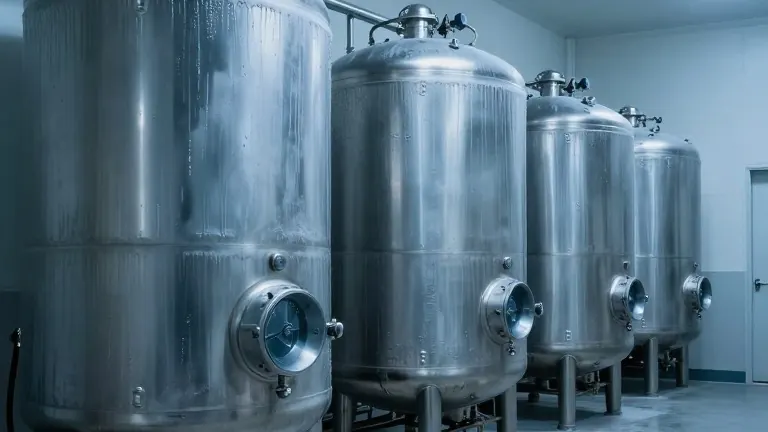
Members have two main options for preservation: whole body or neuro preservation. Whole body preservation costs approximately 220,000 dollars, while neuro preservation, which stores only the head, ranges from 80,000 to 90,000 dollars. Neuro preservation is based on the belief that memory and identity reside in the brain. Alcor currently stores members in large vacuum insulated containers called dewars. The facility includes a 2 year old girl from Thailand who died from brain cancer, and author Rick Lemler, who plans to add his photo to the wall of members when his time comes.
Critics question whether the science can support the promise of revival. Dr. Arthur Caplan, a bioethicist at NYU Grossman School of Medicine, described the expectation of waking a frozen body or head as preposterous. He pointed to unsolved problems in chemical balance and the difficulty of integrating a stored brain with a new body. Caplan argued that a transplanted brain would receive conflicting nerve signals from the new body, a process the old brain would not know how to process. However, he conceded that using advanced preservation for organ banking and heart repair is a realistic possibility.
Arrowood acknowledges the uncertainty inherent in the field. He stated that he does not know if the process will ever work and that it might not work for him personally. He compared the gamble to early medical breakthroughs, such as the first heart transplant, where the patient knew they would die shortly after the procedure but did it to pave the way for future generations. Alcor’s history includes legal disputes and debates over regulation, though Arrowood noted that many of the controversies people cite are 30 to 40 years old. Recent conflicts are often tied to logistics and the life insurance policies used to fund preservation.
Lemler, who has signed up for cryopreservation, views the choice as a personal bet on possibility rather than certainty. He said he is concerned about the chances of failure but feels he is not losing anything in the bargain. For him, the alternative to being preserved is finality. The organization continues to operate, storing hundreds of members in its dewars while waiting for the day that science might catch up to the promise.