Players Chain PS5 to PC to Force Nvidia DLSS 5 on GTA VI
A community workflow uses a capture card and open source software to upscale the console version of the upcoming game.
By Mateo Thompson ·
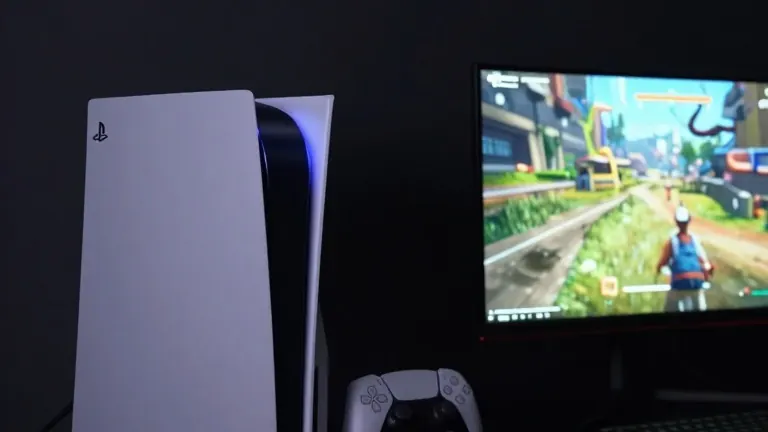
Gamers are building external rigs to apply Nvidia DLSS 5 to the console version of Grand Theft Auto VI.
The game launches on consoles this month and will not run on personal computers at first. This limits players to the hardware capabilities of the PlayStation 5 or Xbox Series X. A specific group of enthusiasts is bypassing that limitation by treating the console as a raw video source.
A user named RevolutionaryBus8208 posted a detailed workflow on an unmoderated subreddit dedicated to the upcoming title. The setup begins with connecting a PlayStation 5 to a personal computer using a 4K capture card. This connection allows the PC to receive the unprocessed video signal from the console. The signal then routes through Veyra, an open source utility that uses AI powered neural rendering.
Veyra applies the DLSS 5 enhancements to the incoming video stream. A core part of this process is frame generation. The system takes the source material running at 30 frames per second and interpolates additional frames. The output reaches 90 frames per second, creating a smoother visual experience. The final processed signal transmits back to a 4K television. This chain adds the visual benefits of a discrete graphics card to a game that does not natively support that hardware at launch.
To test the configuration, the user processed the Grand Theft Auto VI Extended Look trailer from August. The results showed specific improvements in visual fidelity. Background elements appeared sharper than in the unprocessed source. Shadow rendering became more subtle. Light scattering on various surfaces looked more believable. These changes indicate that the external processing pipeline can enhance the base console output.
The enhanced video also displayed distinct drawbacks. Side by side comparisons with the original trailer revealed that the DLSS processed version looked washed out. The original footage contained deeper black levels that the enhanced version did not preserve. Some scenes exhibited unnaturally smooth motion. Viewers described this as the soap opera effect, a look that makes cinematic content resemble a live broadcast.
The frame generation process introduced occasional graphical artifacts into the video stream. Despite these imperfections, the demonstration validates the technical feasibility of the method. It shows how far DLSS 5 has advanced since earlier iterations faced skepticism in the online gaming community earlier this year. The setup requires specific hardware and stable software operation to function correctly.
This approach reflects a preference for personalized visual control among dedicated players. By bridging the gap between console and PC hardware through external processing, enthusiasts aim to extract maximum visual fidelity from the title. The method remains complex and introduces potential latency. It serves as a proof of concept for how AI driven upscaling functions in non native environments.
The success of similar setups depends on the efficiency of the capture card and the stability of the open source software. If these components refine over time, the technique could become a common niche for hardcore gamers. Players would gain an edge in visual clarity and frame rate consistency without waiting for a native PC port.
More Tech · National news · Report a business · Got a Story?