Israelis head to the polls to decide the country's next leader
Over seven million citizens cast ballots in a tight race between Prime Minister Benjamin Netanyahu and former military chief Gadi Eisenkot.
By Ivan Mori ·
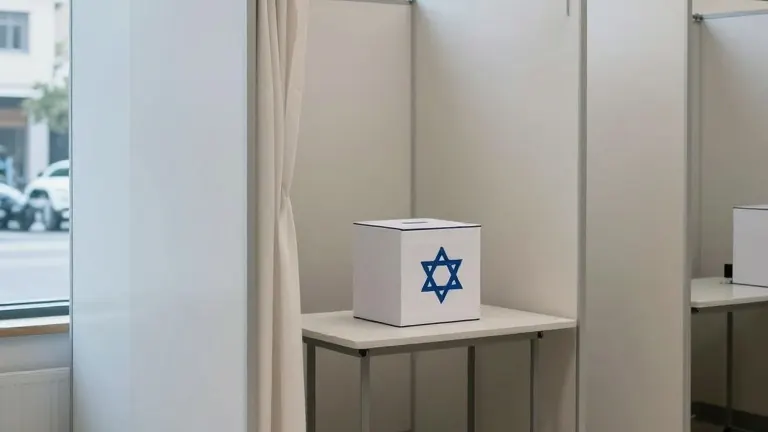
Israeli citizens went to the polls on Tuesday to determine who will lead the nation after three years of regional conflict.
More than seven million people were eligible to vote in this election, which is the first national vote since the October 7, 2023 attack. Tens of thousands of voters traveled from overseas to cast their ballots. Early data from the Central Elections Committee showed that nearly 17 percent of voters had cast ballots in the first three hours. This represents the highest turnout by that specific time since 1981.
The contest pits incumbent Prime Minister Benjamin Netanyahu against Gadi Eisenkot, a former head of the military. Netanyahu seeks to retain power as the longest-serving premier in Israeli history. Eisenkot, whose son and two nephews were killed in Gaza, runs as the primary challenger. Other parties, including the Arab-led Ra’am party, also participated in the vote.
Mansour Abbas, the head of the Ra’am party, stated that his community’s vote would change the government. He expressed hope that turnout in Arab communities would exceed 70 percent. Itamar Ben-Gvir, the far-right national security minister, warned that it would be a Mansour Abbas government if Netanyahu and his allies did not win. Ben-Gvir is known for his strict stance on Palestinian detainees and his remarks regarding the demographics of Gaza.
Israel’s parliamentary system requires parties to form coalitions because no single party has ever achieved a majority on its own. Analysts note that neither Netanyahu’s bloc nor the coalition seeking to remove him may have enough seats to form a government immediately. This could lead to weeks of negotiations. The Arab-led parties hold the potential to act as kingmakers if they agree to support one candidate and if other parties are willing to join forces with them.
The election centers on security, military conscription, and the role of religion in the state. Netanyahu’s supporters view him as a steady leader who has protected Israel’s Jewish identity. His critics argue he is polarizing and has delayed the end of the war for political reasons. They also accuse him of allowing ultra-Orthodox men to avoid mandatory military service. Eisenkot’s supporters see him as a bulwark against illiberal trends and a leader who can restore the independence of the judiciary.
Tensions with Iran remain a backdrop to the vote. Netanyahu recently appeared in a video standing next to a missile-defense battery. He warned that Tehran would face a devastating blow if it attacked Israel. In Tel Aviv, families of victims from the October 7 attack held a moment of silence before polls opened. Yona Adam, whose daughter was killed, urged voters to remember those whose voices are no more. Around 330,000 young Israelis are voting for the first time, many of whom face compulsory military service.
Eisenkot visited communities near Gaza that were attacked on October 7. He said that any leader with responsibility would start their day in those areas. His Yashar party filed a complaint regarding nine incidents where ballot slips were missing or damaged. Dean Livne, the acting director-general of the elections committee, stated that the number of reported irregularities was lower than in previous elections.