Knesset Math: Eisenkot Secures 67-Seat Backing for Prime Minister Mandate
President Isaac Herzog announced that 67 lawmakers recommended Gadi Eisenkot to form a government, while 46 backed Prime Minister Benjamin Netanyahu.
By Lauren Bello ·
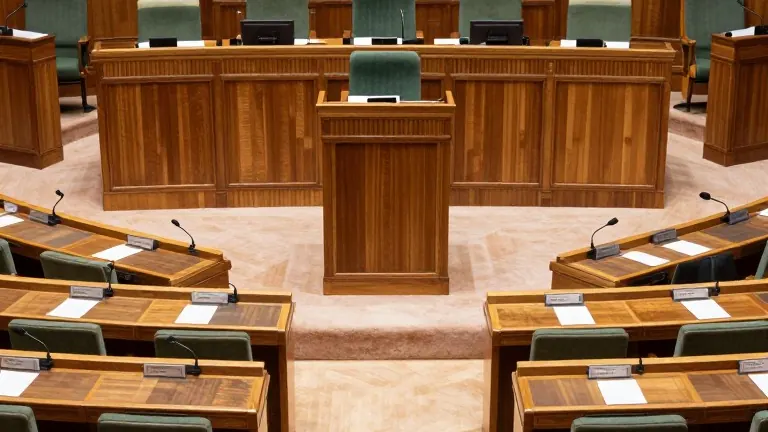
Gadi Eisenkot holds the support of a Knesset majority to form a new government.
President Isaac Herzog announced on Thursday that 67 members of the Knesset recommended Eisenkot for the prime ministerial mandate. In the same consultation, 46 lawmakers backed current Prime Minister Benjamin Netanyahu. Herzog described the outcome as clear but stated he would continue discussions before formally assigning the mandate on Sunday.
The political landscape shifted after last week’s election, in which Netanyahu and his allies lost their legislative majority. The anti-Netanyahu coalition is currently divided. A 48-member bloc led by Jewish parties sits alongside a 19-member bloc led by Arab parties. Netanyahu leads a 46-member bloc. The United Torah Judaism party, which holds seven seats, refused to recommend its long-time ally Netanyahu. This decision potentially opens a path for UTJ to support Eisenkot in a future coalition.
Reports from Channel 12 indicate that Avigdor Liberman, head of Yisrael Beytenu, has dropped his long-standing refusal to partner with Haredi parties. Liberman is open to working with UTJ, viewing the removal of Netanyahu as the primary goal. The proposed arrangement includes a power-sharing rotation between Liberman and Eisenkot and negotiations on a draft agreement for Haredi military service.
The new Knesset is scheduled to be sworn in on November 10. Lawmakers will also determine if a new speaker will replace Amir Ohana. Ohana stated he will schedule a debate on his successor if at least 61 lawmakers formally request it. Ra'am, the Joint List, Yisrael Beytenu, and the Democrats have called for an early vote on the speaker.
Mansour Abbas, leader of Ra'am, condemned terrorism during the presidential consultation. He called for Hamas to be disarmed and removed from power but did not explicitly label the group a terrorist organization. Eisenkot had set that designation as a condition for partners. Abbas defended his party’s position by comparing the 2021 coalition with Yair Lapid and Naftali Bennett to the current government. He stated that the 2021 administration’s worst day was infinitely better than the fully right-wing government currently in office.
Yousef Jabareen, chair of the Joint List, said the party’s support for Eisenkot reflects a demand for change among Arab voters. He cited issues including racism, discrimination, and crime. Jabareen acknowledged disagreements with Eisenkot but framed the choice as selecting between a bad and an even worse option. Ahmad Tibi, a Joint List member, said the party would support a minority government from outside the coalition. He argued that the party’s 11 seats are essential for any parliamentary move.
Merav Cohen, a member of the B’Yachad party, described Eisenkot as an extraordinary person capable of forming a government. She dismissed the idea of a unity rotation with Likud, citing broken agreements in past unity governments. She stated she learned not to do business with scorpions. Yoram Cohen, a former Shin Bet chief and Yashar member, warned against ignoring the public desire for change by going to another election. Meanwhile, Likud ministers Yoav Kisch and Miri Regev urged a broad national government. Regev labeled Eisenkot’s bloc a disaster bloc. Herzog responded that those wanting to extend a hand cannot call it a disaster.
More Politics · World news · Report a business · Got a Story?