Out-of-state donors are reshaping Senate campaign messages
Candidates in four key races spent over $15 million on national fundraising ads, with 75% of that money going to audiences outside their home states.
By Mateo Thompson ·
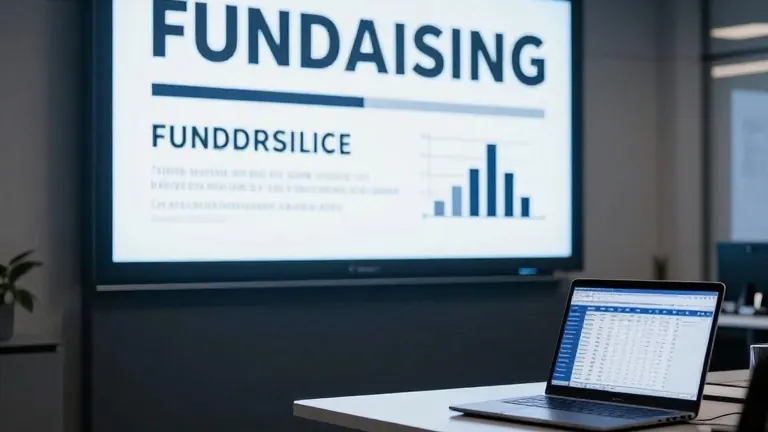
Senate candidates in four major races are spending more than $15 million on digital ads to solicit donations from voters outside their home states. An analysis of Google Ads for contests in Iowa, Georgia, Ohio, and Texas found that approximately 75 percent of that spending targeted national audiences rather than local voters. This shift means the messaging used to raise money often differs from the messaging used to win local elections.
For some candidates, the reliance on external funds is total. More than 80 percent of itemized individual contributions for Georgia Senator Jon Ossoff and Iowa Democratic nominee Josh Turek came from out of state. The same pattern holds across at least four competitive races, where a majority of campaign dollars originate from outside the state lines. Platforms like ActBlue and WinRed have made this possible by lowering the cost of processing small donations.
Zachary Albert, a politics professor at Brandeis University, noted that these platforms reduced transaction costs significantly. He explained that even a $5 or $10 donation is now worthwhile for candidates because the cost to solicit it is much lower than in the past. This economic incentive drives candidates to use digital ads to reach a wider pool of potential donors.
The content of these ads often focuses on national issues rather than local priorities. In local television spots, candidates usually avoid party labels to appeal to swing voters. In digital ads for out-of-state donors, the party label becomes more important. Former Ohio Senator Sherrod Brown uses ads to call for turning his state blue, while Georgia Representative Mike Collins asks supporters to help turn his state's Senate seat red.
Michael Franz of the Wesleyan Media Project observed that candidates shift their tone when appealing to a national donor base. He stated that in a general election local ad, a candidate will rarely say they are a Democrat to keep moderates happy. However, in a digital ad airing outside the state, the party identity becomes the primary hook for fundraising.
Political science professor Daniel Hopkins of the University of Pennsylvania described a new era where candidates must appeal to two distinct groups. Local voters determine who gets the seat, but a nationwide donor base determines who gets the resources to compete. Hopkins pointed out that when Ossoff seeks votes, he competes with Georgia Republicans. When he seeks dollars, he competes with other prominent Democratic candidates for national attention.
The trend has historical roots in platform availability. Democrats launched ActBlue in 2004, giving them a nearly 15-year head start over Republicans, who launched WinRed in 19. This early advantage allowed Democrats to build a robust infrastructure for small-dollar fundraising in states with weaker local party systems. Republicans have since caught up, particularly after realizing the potential of a national base of small donors during the Trump era.
Sarah Bryner, a director at Public Agenda, noted that donors in heavily partisan states often send money to competitive states like Georgia or Texas. She cited the example of Californians who feel their home state will go blue regardless and thus support candidates elsewhere. While some states like Hawaii plan to cap out-of-state donations starting in 2027, national regulation remains difficult due to Supreme Court rulings on campaign spending.
The National Republican Senatorial Committee has already spent three times as much on advertisements in this cycle compared to the previous midterms. This surge follows a June Supreme Court decision that favored coordinated campaign spending. Despite the influx of outside money, Bryner argued that out-of-state donors cannot vote for the candidate. She noted that candidates who rely heavily on external funds, such as Amy McGrath in Kentucky and Beto O'Rourke in Texas, have still lost their races.