Tesla Adopts Fleet-Generated Maps to Fix FSD's 55% Speeding Error Rate
Tesla is shifting away from third-party navigation data to build its own map layer, a strategic pivot aimed at resolving persistent issues with speed limits and routing in its self-driving software.
By Lauren Bello ·
Tesla is reversing a long-standing engineering position by developing its own proprietary mapping infrastructure, a move designed to correct significant performance gaps in its Full Self-Driving (FSD) system. The shift addresses core operational failures, specifically the software’s inconsistent ability to interpret speed limits, manage parking, and select optimal routes.
On the company’s Q3 2026 earnings call, Tesla’s VP of AI, Ashok Elluswamy, confirmed the development of a new AI-based mapping and navigation architecture. He stated that the system will leverage data collected by the existing fleet to create a dynamic map that learns individual driver preferences and responds to voice commands. Elluswamy noted that this technology will initially handle the start and end of trips with FSD v15, with full navigation and destination handling expected to follow within months.
This development marks a stark contrast to the company’s historical stance. In 2019, during its Autonomy Day presentation, CEO Elon Musk dismissed high-precision lane maps as a "huge mistake" and a "really bad idea" that renders self-driving systems brittle. At the time, Musk argued that Tesla could solve driving entirely through cameras and AI, explicitly critiquing competitors like Waymo for relying on lidar and detailed maps. That sentiment was reinforced in 2015, when Tesla claimed to be building maps with "100 times the level of granularity" of standard navigation, only to later pivot away from that specific high-definition approach.
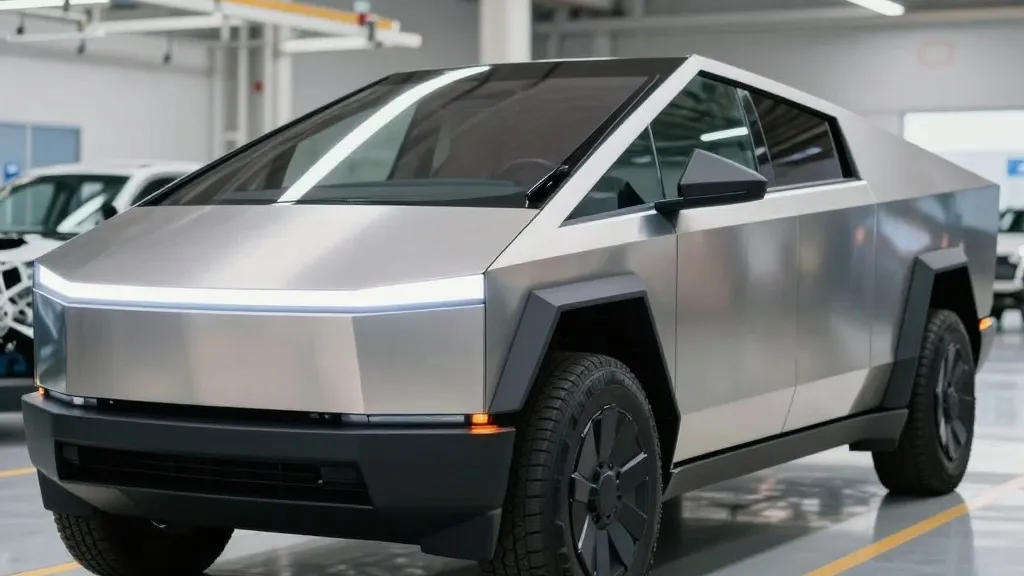
The new map layer is intended to address specific environmental understanding failures that the vision-based system has struggled to resolve. Recent data highlights the urgency of this fix: last month, a Belgian road safety group reported that FSD exceeded the speed limit in 55% of 30 km/h zones in Brussels, averaging 44 km/h. The error was partly attributed to the car’s display showing an incorrect 50 km/h limit. In the United States, the NHTSA is currently weighing an investigation into claims that Tesla Robotaxis speed through active school zones, an issue affecting approximately 1,000 Model Y and Cybercab vehicles.
From a market perspective, this strategy aligns Tesla’s operational model more closely with its primary competitor, Waymo. Waymo has long operated by driving sensor-equipped vehicles through cities to build and update maps before launching service. Tesla is now adopting a similar fleet-based mapping approach, where data from millions of vehicles feeds a central map that improves the driving experience for the entire network. While Tesla is not currently promising centimeter-level high-definition maps, the gradual increase in detail suggests a trajectory toward similar precision.
The pivot also reflects the current reality of Tesla’s Robotaxi service, which operates within small, geofenced service areas on a city-by-city basis. The reliance on a fleet-built map that becomes increasingly detailed over time supports this limited-geography model. As the company pushes unsupervised FSD for consumer cars to Q2 2027, the integration of this new mapping infrastructure is critical to validating the software's reliability in diverse driving environments.
For investors and market observers, the adoption of proprietary maps signals a maturing approach to autonomous driving. It acknowledges that while vision-based AI is powerful, it requires structured environmental data to perform consistently. This move may enhance the scalability of Tesla’s self-driving capabilities, potentially reducing the need for human intervention in common driving scenarios and supporting the long-term valuation of its autonomous fleet.
More Business · Watch Your Wallet · Report a business · Got a Story?