77.7% turnout in Israel as 61-seat majority remains elusive in latest Knesset count
Partial data indicates neither Benjamin Netanyahu nor Gadi Eisenkot can form a government alone, forcing a search for coalition partners among parties both leaders have previously dismissed.
By Lauren Bello ·
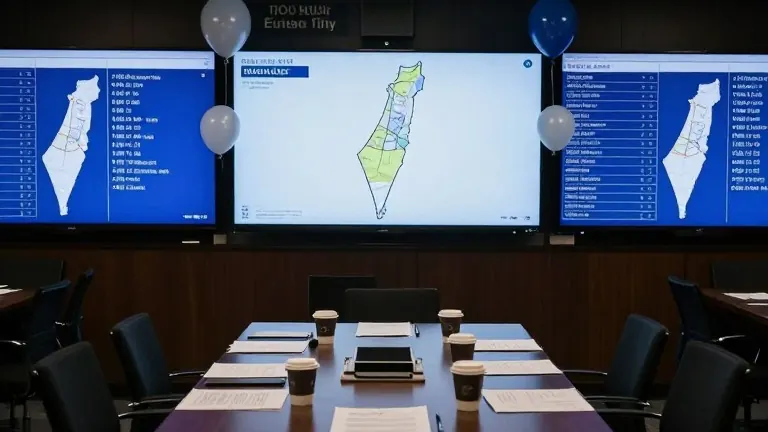
The Israel Central Elections Committee reported 77.7% voter turnout nationwide as of Tuesday night, a figure that marks the highest participation rate since 1999.
Votes from the parliamentary election were still being counted on Wednesday morning, with the committee stating that final results were not expected until Thursday.
Exit polls suggested that neither of the two main coalition blocs secured the 61 seats required for a majority in the 120-seat Knesset.
Incumbent Prime Minister Benjamin Netanyahu leads the right-wing Likud party, while former Israel Defense Forces chief Gadi Eisenkot heads the centrist Yashar party.
Both leaders claimed a mandate from voters on Tuesday night despite the projected lack of a clear winner.
Netanyahu asserted that Likud was the largest party in Israel and argued that the country must form a right-wing, national, and strong government.
He warned against establishing a government backed by anti-Zionist Arab parties, stating that such a move would endanger the nation.
Eisenkot told supporters at his headquarters that the vote marked the end of the Netanyahu era.
He described the incumbent as a transitional prime minister without a mandate or trust, telling Netanyahu directly, "Do not dare to use Israel's security for your political needs."
Security issues and the ongoing conflict with Iran dominated the campaign, along with questions over the management of the war in Gaza.
Netanyahu said Israel has a unique opportunity with President Donald Trump to remove the existential threat of Iran once and for all.
If official results confirm no clear winner, President Isaac Herzog will consult with party leaders and offer the chance to form a government to the leader he believes has the best chance of success, usually the leader of the largest party. Netanyahu will remain caretaker prime minister while negotiations, which can last for several weeks, proceed. Failure to form a capable coalition may result in another election. Between 2019 and 2022, Israeli voters went to the polls five times as parties tried and failed to form an adequate coalition. That period of deadlock ended with Netanyahu establishing a government with control of 64 Knesset seats. Exit polls suggested significant success for Arab-Israeli parties. If reflected in official results, the coalitions led by Netanyahu and Eisenkot may need the backing of these parties to secure a majority. Both leaders have previously ruled out forming a coalition with the Arab parties. Netanyahu suggested in his speech that any government including them would endanger Israel.