Three envoys visit Tehran as Mecca alliance seeks to halt conflict
Pakistan, Saudi Arabia, and Turkey sent top military and intelligence leaders to Iran on Monday to negotiate a regional non-aggression network before US midterms.
By Mateo Thompson ·
The Middle East faces a critical window before the United States midterm election on November 3.
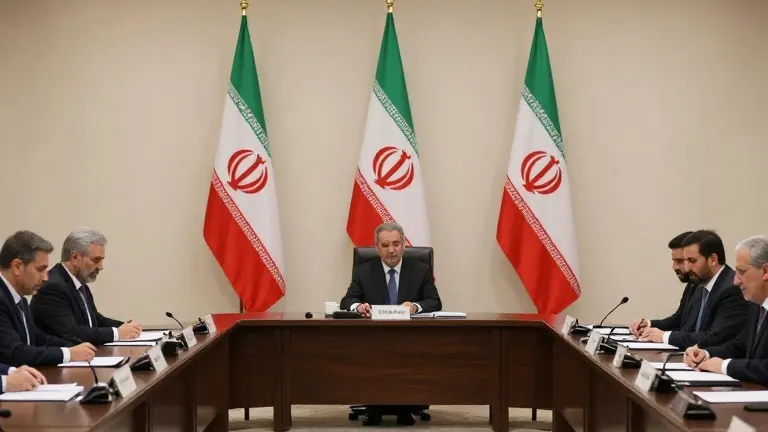
Three military and intelligence leaders traveled to Tehran on Monday to deliver a coordinated diplomatic message to the Iranian government.
Asim Munir, the army chief of Pakistan, Khalid bin Salman, the defense minister of Saudi Arabia, and Ibrahim Kalin, the head of Turkish intelligence, met with Iranian President Masoud Pezeshkian and other senior officials.
These representatives act on behalf of the Mecca defense pact, a military alliance between Islamabad, Riyadh, and Ankara that was formally established this summer.
Saudi Arabia stated that the visit aims to open negotiating channels and prevent a return to military escalation.
A senior Pakistani official told Reuters that the discussions focused on building a regional non-aggression network.
The agenda also covered US-Iran talks, Houthi attacks on Saudi Arabia, the Strait of Hormuz, and the US naval blockade.
Munir presented a solution that would offer terms acceptable to both Washington and Tehran, with the Mecca states and Qatar acting as mediators.
The source noted that US President Donald Trump previously authorized Munir to pursue this diplomatic track.
Iran described the atmosphere during the talks as very positive.
Mohsen Rezaei, head of Iran's Supreme National Security Council, told state television that a new atmosphere is emerging in the region.
Rezaei argued that regional security should be built by West Asian countries without outside intervention. A day later, Rezaei reportedly met Supreme Leader Mojtaba Khamenei. Iranian state media said Khamenei called for protecting Iran's interests and maintaining Tehran's conditions for ending the current state of neither war nor peace. President Pezeshkian subsequently traveled to Moscow for the Gas Exporting Countries Forum. He met with Russian President Vladimir Putin and Qatari Emir Sheikh Tamim bin Hamad Al Thani. Pezeshkian and the emir discussed the war and the status of the Strait of Hormuz. Tehran framed these diplomatic contacts as evidence that the US cannot diplomatically isolate the Iranian regime. Babak Dorbeiki, a London-based political analyst, said the simultaneous presence of the three senior representatives signaled that the nations are acting as a bloc. He noted that the Mecca pact is designed for deterrence rather than offensive war. The alliance allows members to count on Pakistan's nuclear capability and Turkey's conventional military strength. Saudi Arabia faces a dilemma regarding the Houthi rebels. Further attacks damage Saudi infrastructure, but a wider war could threaten key economic development projects. Dorbeiki said Saudi Arabia prefers a diplomatic solution because both the current situation and war carry serious costs. Pakistan has spent months mediating between Washington and Tehran. A direct conflict would distract Islamabad from security concerns involving India. Turkey, a NATO member, sent its intelligence chief rather than its foreign or defense minister, suggesting a cautious approach. Ali Asghar Shafieian, a media advisor to President Pezeshkian, rejected the idea that the Mecca envoys presented an ultimatum. He said the three countries may have wanted to demonstrate their growing coordination while showing Iran remains part of regional diplomacy. Shafieian noted that Iran, like the US and Israel, prepares for possible conflict while maintaining negotiations. He said an agreement remains possible if Iran's political standing and national dignity are respected. Dorbeiki argued that Iran is extending negotiations while avoiding real-world commitments. Tehran has not publicly offered guarantees over Houthi attacks that Riyadh wants. Dorbeiki believes Iran may trade influence over those attacks for concessions such as an end to US military pressure. The only apparent outcome of the Tehran meeting is a commitment to keep talking.