Storms Threaten Texas and Kansas Elections
Hurricane-strength winds and heavy rain are forecast to hit key Senate states on Election Day, though experts say turnout impacts will likely be small.
By Mateo Thompson ·
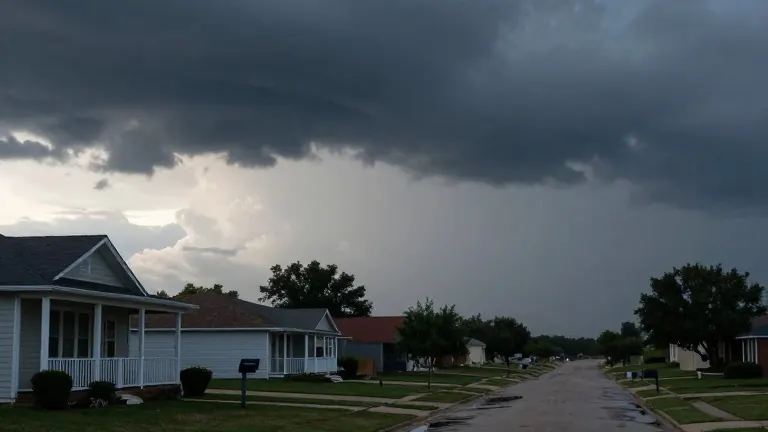
A storm system is set to bring hurricane-strength winds and heavy precipitation to parts of Texas and Kansas on Election Day Tuesday. The weather pattern, which began moving through the central United States on Monday, threatens to disrupt voting in states with tightly contested Senate races.
Evan Bentley, a warning coordination meteorologist at the National Weather Service Storm Prediction Center in Norman, Oklahoma, confirmed that moisture is moving from Texas and Oklahoma into Kansas and Missouri. He noted that conditions support severe weather, including damaging straight-line winds and potential tornadoes. Bentley reported that North Texas and Oklahoma may experience winds exceeding 75 miles per hour on Monday. Such speeds can damage power lines and infrastructure, though he described the event as consistent with regional weather patterns.
The system will shift eastward on Tuesday. Jennifer Tate, a meteorologist at the National Weather Service Weather Prediction Center in College Park, Maryland, warned of scattered flash floods in the lower Mississippi River valley, including Memphis. She indicated that heavy rainfall is possible in Mississippi, Missouri, and western Tennessee. Much of the central U.S., from East Texas to the Midwest, will remain wet and dreary throughout the voting period. Tate noted that Iowa may see locally heavy rain, though she expressed hope that travel would not be heavily impacted.
In contrast, the West Coast faces fair weather with isolated rain in Northern California. The East Coast is expected to be clear, with rain limited to Florida and Maine. Campaigns in the affected central states are monitoring the forecast closely, as rain can influence the number of voters who reach polling places on a specific day.
Historical data suggests rain has a measurable but modest effect on voter turnout. Brad Gomez, an associate professor of political science at Florida State University, analyzed presidential elections between 1948 and 2000. His team found that for every inch of rain above the average, county turnout dropped by 0.8 percentage points. However, Gomez noted that voting habits have changed since then. The U.S. Election Assistance Commission estimates that only about 37% of Americans cast ballots on Election Day today, down from higher figures in the past.
The impact of bad weather varies by state based on early voting adoption. In the 2024 election, only about 20% of Texans voted in person on Election Day. In Minnesota, that figure was approximately 60%, and in Kansas, it was about 45%. Because more Kansas and Minnesota voters rely on in-person polling on the day itself, weather disruptions carry more weight in those states than in Texas.
Thomas Fujiwara, an associate professor of economics at Princeton University, stated that the correlation between rain and turnout has weakened over time. He observed that the effect was stronger in the 1950s and 1960s but is less pronounced now. Both Fujiwara and Gomez agreed that it is difficult to predict which political party might benefit from the weather, given the recent shifts in how voters cast their ballots.